table of contents
Quick answer: “Black mold” is a term most people use to describe any dark-colored mold growth, but it technically refers to Stachybotrys chartarum, a specific species that requires prolonged water saturation to develop and is far less common than the dark molds people typically find in bathrooms, basements, and behind walls. Any mold growth covering 10 square feet or more in a New York property requires remediation by a licensed contractor under New York State Labor Law Article 32, regardless of species. The color of mold does not determine how dangerous it is or how it should be removed. What determines the remediation approach is the scope of contamination, the moisture source, and whether the affected materials are porous. GreenRoom Remediation provides licensed mold assessment coordination and remediation across all five NYC boroughs, Long Island, Westchester, and Northern New Jersey. Call (917) 965-3754 for a same-day assessment.
Few terms in residential property management generate more immediate anxiety than “black mold.” Homeowners who notice dark staining in a bathroom corner or behind a piece of furniture frequently assume the worst, while others dismiss obvious mold growth because it does not match the specific appearance they associate with the term. Both responses lead to poor decisions. Understanding what black mold actually is, how it differs from other mold species commonly found in NYC buildings, and what the remediation process involves for any significant mold growth is what leads to the right outcome.
What Is Black Mold and Is It Different From Other Mold?
Stachybotrys chartarum is the species most commonly called black mold. It is a greenish-black fungus that grows on materials with high cellulose content, most commonly drywall paper, wood, ceiling tiles, and insulation that have been continuously wet for an extended period, typically 10 days or more of sustained moisture exposure. Unlike many other common indoor mold species, Stachybotrys chartarum requires ongoing saturation rather than periodic moisture cycles to establish and grow. This means it is most commonly found following significant water damage events that were not fully dried, such as a burst pipe that went undetected for weeks, a roof leak that saturated ceiling assemblies over months, or chronic basement flooding.
The reason Stachybotrys chartarum receives disproportionate attention relative to how frequently it actually appears is the body of research connecting it to mycotoxin production. Under the right growth conditions, some strains of Stachybotrys produce trichothecene mycotoxins that can cause respiratory irritation, immune system effects, and other health impacts at sufficient exposure levels. However, the conditions required for significant mycotoxin exposure are far more specific than most media coverage suggests, and the scientific consensus does not support the extreme health claims that circulate about black mold in popular media.
The more important practical reality for NYC property owners is that Stachybotrys chartarum is one of dozens of mold species that a certified mold assessor might identify in an indoor environment, and none of them should be present at elevated concentrations indoors. Common species such as Cladosporium, Penicillium, Aspergillus, and Chaetomium are all frequently found in NYC buildings and all require professional remediation when they exceed baseline levels. Cladosporium, one of the most common indoor mold species, is also frequently dark in color. The overwhelming majority of dark mold found in NYC bathrooms, kitchens, and basements is not Stachybotrys chartarum. Only laboratory analysis of air or surface samples can identify the species present.
What Are the Actual Health Risks of Mold Exposure in NYC Homes?
Mold exposure in indoor environments presents real health risks that do not require sensationalism to take seriously. The risks that are well-supported by research include aggravation of existing respiratory conditions such as asthma, allergic reactions including nasal congestion, sneezing, and eye irritation, and in sensitive individuals, more pronounced respiratory symptoms from sustained exposure. Children, elderly residents, and people with compromised immune systems face higher risk of significant health effects from indoor mold exposure than healthy adults.
In NYC’s dense housing stock, shared HVAC systems, and tightly sealed apartment environments, mold spore concentrations can build to levels that would not be reached in a more ventilated residential setting. A mold source in one unit of a Brooklyn co-op or Queens multifamily building can distribute spores through shared ventilation pathways to adjacent units where no visible growth exists. This is one of the primary reasons air quality testing is a more reliable assessment tool than visual inspection alone in NYC residential environments.
The NYC Department of Health and Mental Hygiene guidelines on mold confirm that any mold growth in an occupied residence should be addressed, that larger areas of contamination require professional remediation, and that residents with health concerns attributable to mold should consult a physician. These guidelines do not distinguish between species in determining whether remediation is warranted. The presence of mold at elevated concentrations is the trigger for action, not the identification of a specific species. For more on how mold inspection identifies contamination scope and species, see our article on mold testing in NYC and what the $499 inspection includes.
How Do You Know If the Dark Mold in Your Property Is Stachybotrys?
You cannot determine mold species from visual inspection. Color, texture, and growth pattern are not reliable identifiers. Stachybotrys chartarum is greenish-black and typically appears as a slimy or wet-looking growth on heavily saturated materials. But Cladosporium, Aspergillus niger, Alternaria, and other common species also appear dark and are far more frequently found in NYC residential properties than Stachybotrys chartarum.
The only way to identify the species present is through laboratory analysis of air samples or surface swab and tape lift samples collected by a licensed mold assessor. Surface sampling from visible growth areas is the most direct method for species identification. Air sampling identifies what is airborne and may reveal species present at elevated concentrations even in areas where no visible growth exists.
From a remediation standpoint, species identification matters less than contamination scope and moisture source. The remediation process for Stachybotrys chartarum follows the same containment, HEPA filtration, physical removal of contaminated materials, antimicrobial treatment, and structural drying protocol as remediation for any other mold species. The difference is that Stachybotrys growth indicates sustained moisture exposure, which means the moisture investigation and source correction component of the remediation is particularly important. For more on why hidden moisture is the root cause of recurring mold problems in NYC buildings, see our article on hidden moisture and recurring mold problems in NYC.
When Does Mold Require Professional Remediation Under New York Law?
New York State Labor Law Article 32 establishes clear thresholds for when licensed professional involvement is required. Any mold remediation project involving a contaminated area of 10 square feet or more requires a licensed mold remediator. Any assessment or inspection conducted in connection with a remediation project of that scale requires a separately licensed mold assessor. These two roles must be held by different licensed entities on the same project.
The 10-square-foot threshold is smaller than most property owners realize. A 10-square-foot area is roughly 2 feet by 5 feet, which is smaller than most bathroom walls and considerably smaller than the mold growth patterns that typically develop behind drywall or under flooring after a significant water event. In practice, any mold growth that is clearly visible across a wall, ceiling, or floor area in a NYC apartment or house almost certainly exceeds 10 square feet when hidden growth in adjacent materials is factored in.
For mold growth below the 10-square-foot threshold, property owners may address the condition themselves using safe work practices, which include personal protective equipment, containment of the work area, and proper disposal of contaminated materials. However, even small visible mold growth is often the surface indication of a larger concealed contamination. A professional assessment before deciding to self-remediate is the lower-risk starting point for any mold that appears in connection with a prior water damage event.
What Does Black Mold Remediation Actually Involve?
Regardless of whether the species is Stachybotrys chartarum or another common mold type, professional mold remediation in NYC follows a defined process governed by New York State Labor Law Article 32, the licensed assessor’s written remediation protocol, and the ANSI/IICRC S520 Standard for Professional Mold Remediation — the industry consensus framework that establishes procedures for containment, removal, and post-remediation verification.
Assessment and Scope Definition
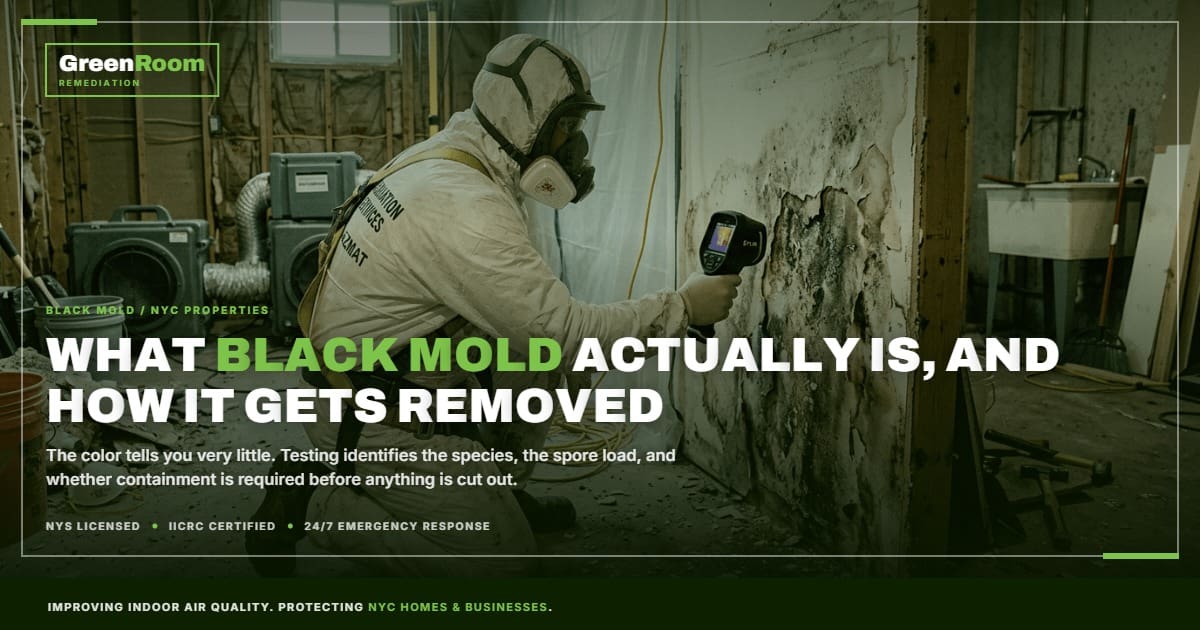
A licensed mold assessor inspects the property, conducts moisture mapping and infrared imaging to identify hidden contamination, collects air and surface samples for laboratory analysis, and produces a written remediation protocol that defines the scope of work the remediator must follow. This assessment is completed before remediation begins and cannot be performed by the same company that will perform the remediation.
Containment and Air Filtration
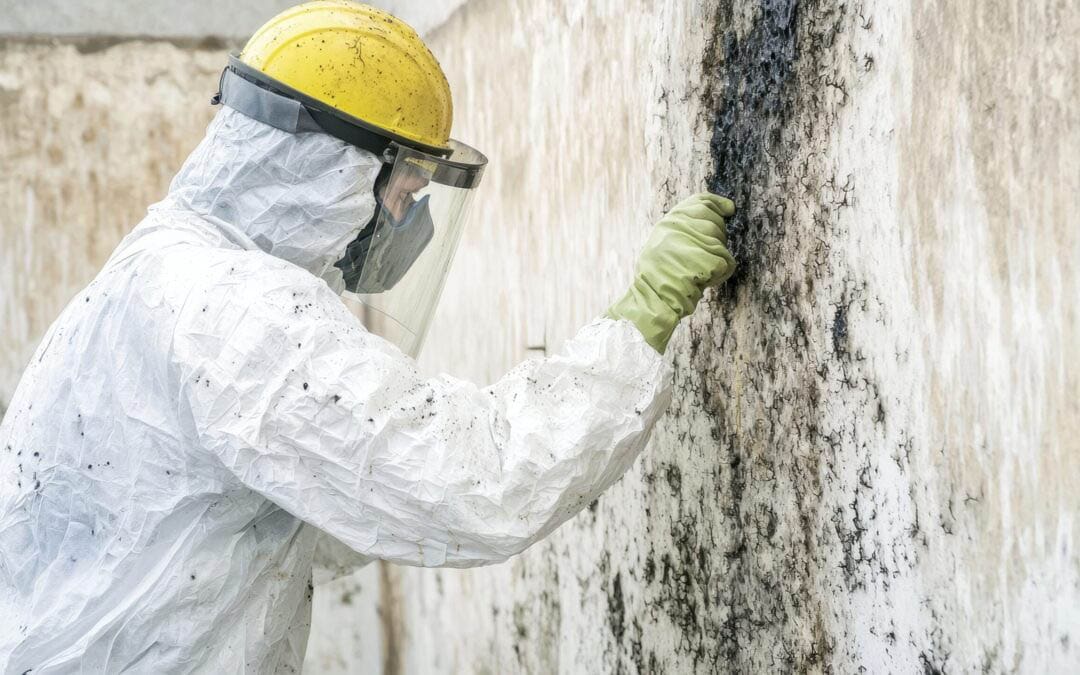
Containment barriers are installed to isolate the work area from the rest of the property. Negative air pressure systems using HEPA-filtered air scrubbers maintain airflow from clean areas into the containment zone, preventing spores disturbed during demolition from migrating into unaffected spaces. In NYC apartments, brownstones, and multifamily buildings where adjacent units share wall cavities and ventilation pathways, containment is particularly important to prevent cross-contamination.
Removal of Contaminated Materials
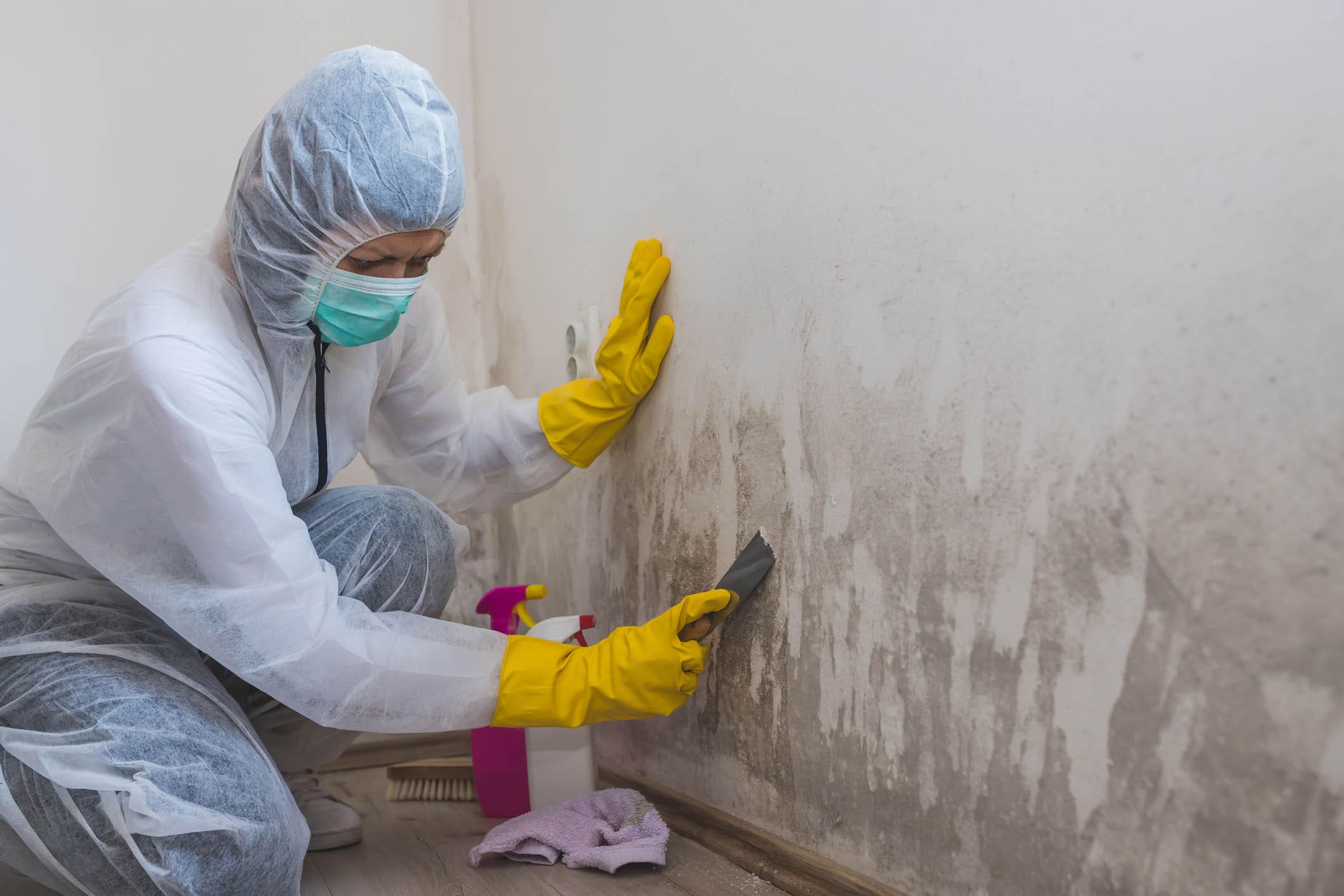
Porous materials that have absorbed mold growth, including drywall, insulation, wood framing in some cases, and flooring systems, are physically removed and properly disposed of. Surface cleaning of non-porous materials is performed using EPA-registered antimicrobial treatments. The common misconception that mold can be killed in place with bleach or biocides without physical removal is one of the most persistent errors in DIY mold treatment. Dead mold spores remain allergenic and can still trigger immune responses, and the moisture conditions that supported the original growth remain present in saturated materials until those materials are removed.
Structural Drying and Moisture Source Correction
After contaminated materials are removed, the underlying structural components are dried to acceptable moisture content levels using calibrated dehumidification and air movement equipment. Critically, the moisture source that allowed the mold to develop is identified and corrected before the project is considered complete. Mold returns when moisture returns. A remediation project that removes visible contamination without correcting the underlying moisture pathway is a temporary fix, not a solution.
Clearance Testing
After remediation is complete, a licensed assessor independent of the remediation contractor conducts post-remediation clearance testing. Air samples confirm that indoor spore concentrations have returned to levels consistent with outdoor baseline conditions. A written clearance report documents the outcome. For properties in Brooklyn, Manhattan, Queens, the Bronx, and Staten Island where mold remediation is connected to an insurance claim, clearance documentation is required before the insurer will close the claim file. See our article on post-remediation clearance testing and why insurers require it for full details.
Common Myths About Black Mold That Lead to Bad Decisions
Several widely held beliefs about black mold consistently lead NYC property owners to either overreact or underreact to mold conditions, both of which result in worse outcomes.
The belief that black mold is always deadly is not supported by the scientific literature. Stachybotrys chartarum can produce mycotoxins under specific conditions, and sustained high-level exposure is associated with health effects. But the extreme claims that circulate about black mold causing neurological damage, organ failure, or death from casual residential exposure are not supported by epidemiological evidence. Mold should be addressed promptly and professionally because it causes real respiratory and allergic health effects at elevated concentrations, not because it is automatically life-threatening.
The belief that bleach kills mold and makes remediation unnecessary is equally damaging. Bleach applied to a porous surface such as drywall or wood kills surface mold growth but does not penetrate into the material where mold roots, called hyphae, extend. The surface appears clean while the contamination remains active inside the material. When moisture returns, growth resumes from the surviving hyphae. This is one of the most common reasons mold returns within weeks or months of a DIY cleaning attempt.
The belief that mold only grows in dirty or neglected properties is also false. Mold grows wherever moisture and organic material are present. A newly renovated Brooklyn apartment with a slow plumbing leak inside a wall is a high-risk mold environment. An older Bronx building with excellent moisture management is a low-risk environment. Cleanliness is not the determining factor.
Frequently Asked Questions
How do I know if I have black mold or a different type of mold?
You cannot determine mold species from visual inspection. Only laboratory analysis of air or surface samples collected by a licensed assessor can identify the species present. Most dark mold found in NYC bathrooms, basements, and around plumbing is not Stachybotrys chartarum. A certified mold inspection will identify what species are present and at what concentrations.
Is black mold more dangerous than other types of mold?
Stachybotrys chartarum has a higher potential for mycotoxin production than many common indoor mold species, but all mold at elevated indoor concentrations presents health risks including respiratory irritation, allergic reactions, and worsened asthma symptoms. The remediation standard under New York State Labor Law Article 32 and IICRC S520 applies regardless of species. Any mold requiring remediation should be addressed by a licensed contractor.
Can I remove black mold myself?
Under New York State Labor Law Article 32, mold remediation covering 10 or more square feet requires a licensed mold remediator. For areas under 10 square feet, self-remediation using appropriate protective equipment and safe work practices is permitted. However, any mold growth connected to a prior water damage event likely extends beyond what is visible, and self-remediation without a prior professional assessment risks missing hidden contamination or misidentifying the moisture source.
How much does black mold removal cost in NYC?
Mold remediation costs in NYC typically range from $1,500 to $6,500 for small to mid-sized projects and from $6,500 to $30,000 or more for larger or structurally complex projects involving multiple rooms or HVAC systems. The cost is determined by the scope of contamination, the materials affected, and the building configuration, not by the species identified. For more on what drives mold remediation costs, see our article on why professional mold remediation costs what it does.
Should I leave my home during black mold remediation?
Whether occupants need to vacate during remediation depends on the scope of the project, the location of the contamination, and any existing health conditions. For large remediation projects or those involving HVAC systems, temporary relocation is often recommended. For smaller contained projects with proper containment barriers in place, occupancy in unaffected areas may be possible. The licensed assessor and remediation contractor will provide guidance specific to the project conditions.
What should I do if I find black mold in my NYC apartment?
Document the visible growth with photographs, avoid disturbing the area, and contact a licensed mold assessment company for an inspection. If you rent, notify your landlord in writing simultaneously, because under NYC Admin Code Section 24-154 and the warranty of habitability, your landlord is legally required to remediate mold covering more than 10 square feet. If the mold appears connected to a water damage event that may be covered by insurance, contact your insurer and a licensed remediation contractor at the same time. See our guide on whether homeowners insurance covers mold remediation in NYC for how the claim process works.
For a licensed mold assessment and remediation coordination in Brooklyn, Manhattan, Queens, the Bronx, Staten Island, Long Island, Westchester, or Northern New Jersey, call GreenRoom Remediation at (917) 965-3754. We are available 24 hours a day, 7 days a week.
GreenRoom Remediation | NY State Licensed Mold Remediation Contractor (License #24-6S44B-SHMO) | IICRC-Certified | OSHA-Trained | BBB Accredited | Serving NYC, Brooklyn, Queens, Manhattan, the Bronx, Staten Island, Long Island, Westchester, and Surrounding Areas.
view related content