The First 48 Hours After a Fire Matter Most
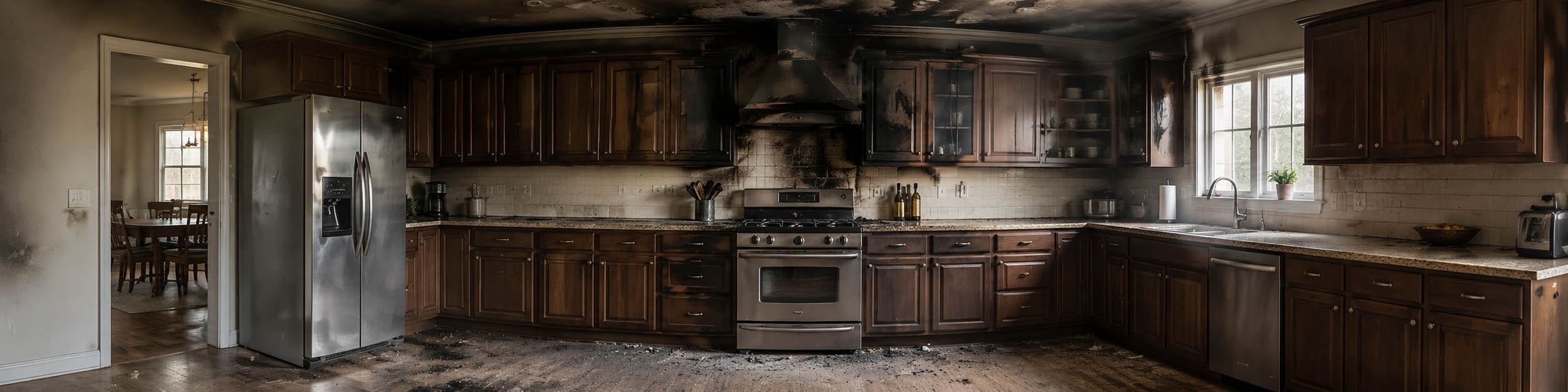
Smoke and soot do not stop working when the fire is out. Soot is acidic, and within a day or two it can begin etching metal, yellowing surfaces, staining walls, and embedding deeper into fabric, flooring, and HVAC systems. At the same time, the water used to put the fire out can soak into drywall, insulation, subfloors, and wall cavities, where mold may begin growing in as little as 24 to 48 hours. A fast professional response helps save materials, control odor, document the loss, and prevent a fire emergency from turning into a larger water and mold problem.
The Fire-to-Water-to-Mold Throughline
Most fire damage pages stop at smoke and soot. GreenRoom Remediation treats the full chain of damage, because in NYC apartments, brownstones, offices, restaurants, and multi-unit buildings, the water and hidden moisture often create the next emergency.
Fire & Smoke
Soot, smoke residue, protein films, and odor settle into walls, contents, ductwork, and porous surfaces. Cleaning starts with identifying the residue type before it spreads or sets permanently.
Water & Hidden Moisture
Firefighting water moves behind walls, under floors, and into insulation. Emergency extraction, moisture mapping, and structural drying help prevent deeper damage after the visible fire cleanup begins.
Mold Risk
When moisture remains trapped, mold can begin developing quickly. GreenRoom connects fire restoration with water damage restoration, HEPA filtration, drying verification, and mold prevention.
Our Fire and Smoke Restoration Services
GreenRoom Remediation manages the mitigation side of fire recovery, from the first emergency call to a clean, dry, odor-controlled space. When reconstruction is needed, we coordinate the next phase so homeowners, property managers, landlords, and commercial owners are not left piecing the recovery together alone.
Not All Smoke Damage Is the Same
Effective fire damage cleanup depends on identifying what actually burned. Dry smoke from fast, high-temperature fires leaves a powdery residue, while wet smoke from slow, smoldering fires leaves a sticky film that smears if it is cleaned the wrong way. Protein residue from kitchen fires can be nearly invisible, but the odor is strong and it coats surfaces throughout the room.
In many older Brooklyn, Queens, Bronx, and Manhattan buildings, smoke damage may also come from a puff back, when an oil furnace or boiler misfires and sends oily soot through a home, apartment line, or mechanical pathway. GreenRoom Remediation assesses the residue type first, then matches the cleaning method to the material, which is the step DIY cleanup and general cleaning companies often miss.
How We Remove Smoke Odor for Good
Smoke odor lingers because the molecules travel into the same porous places smoke reached during the fire, including wall cavities, insulation, ductwork, furniture, fabrics, and unfinished surfaces. Surface cleaning alone rarely solves the problem. GreenRoom Remediation neutralizes odor at the source using HEPA air scrubbing, targeted deodorization, thermal fogging when appropriate, and hydroxyl treatment that breaks odor molecules down at the molecular level.
Many companies default to ozone treatments, which require evacuation because ozone is unsafe to breathe during treatment. We prioritize hydroxyl and low-VOC methods whenever possible, giving families, pets, staff, and tenants a safer path back into the property.
The Damage You Cannot See: Water and Mold
The part of fire recovery that many companies underplay is the water. Firefighting can leave hundreds of gallons inside walls, floors, ceilings, insulation, basements, and mechanical rooms. That hidden moisture is what can turn a fire loss into a mold problem days later.
This is where GreenRoom Remediation is different from a general fire cleanup contractor. We are NYC water damage and mold specialists, so we connect fire restoration with water damage restoration, moisture mapping, structural drying, HEPA filtration, and mold prevention and remediation where needed.
If there is any question about hidden contamination after drying, professional mold testing can confirm whether the air and affected areas are safe before reoccupancy.
Water Extraction
Fire suppression water is removed quickly to reduce absorption into flooring, drywall, trim, and insulation.
Moisture Mapping
We look for trapped moisture behind walls, under flooring, and around mechanical systems rather than relying only on visible damage.
Drying Verification
Affected materials are dried to verified moisture levels before the job is treated as complete.
Mold Prevention
HEPA filtration, moisture control, and proper drying help reduce the conditions that allow mold growth after a fire.
Eco-Friendly, Low-Toxicity Fire Restoration
Restoring a property should not mean filling it with harsh chemicals, especially in homes with children, pets, older adults, or anyone sensitive to strong products. GreenRoom Remediation built its reputation on eco-conscious restoration methods, and we bring the same standard to fire and smoke damage cleanup. Our approach may include low-VOC deodorizers, HEPA filtration, containment, hydroxyl technology, and targeted cleaning methods that remove contamination without creating unnecessary chemical exposure.
Working With Your Insurance Company
A fire claim moves faster when the documentation is right from day one. GreenRoom Remediation photographs and documents fire, smoke, soot, water, and affected contents so your adjuster can understand the full scope of the loss. We coordinate directly with homeowners, landlords, property managers, business owners, and insurance representatives to keep the cleanup process moving.
Because post-fire damage often involves multiple categories, including smoke residue, odor, water damage, contents, and mold risk, clear documentation helps reduce confusion during an already difficult week.
Licensed, Certified, and Local
GreenRoom Remediation follows recognized restoration standards, including IICRC S700 for professional fire and smoke restoration and IICRC S500 for water damage restoration.
Our team understands how smoke, soot, water, and moisture move through New York properties, from older Brooklyn brownstones and Queens multi-family homes to Manhattan apartments, Bronx walk-ups, Staten Island residences, and commercial spaces with shared HVAC systems.
We also understand that fire cleanup in NYC is rarely just surface cleaning. It often involves access limitations, insurance documentation, tenant communication, building management coordination, odor control, moisture verification, and mold prevention after water damage.
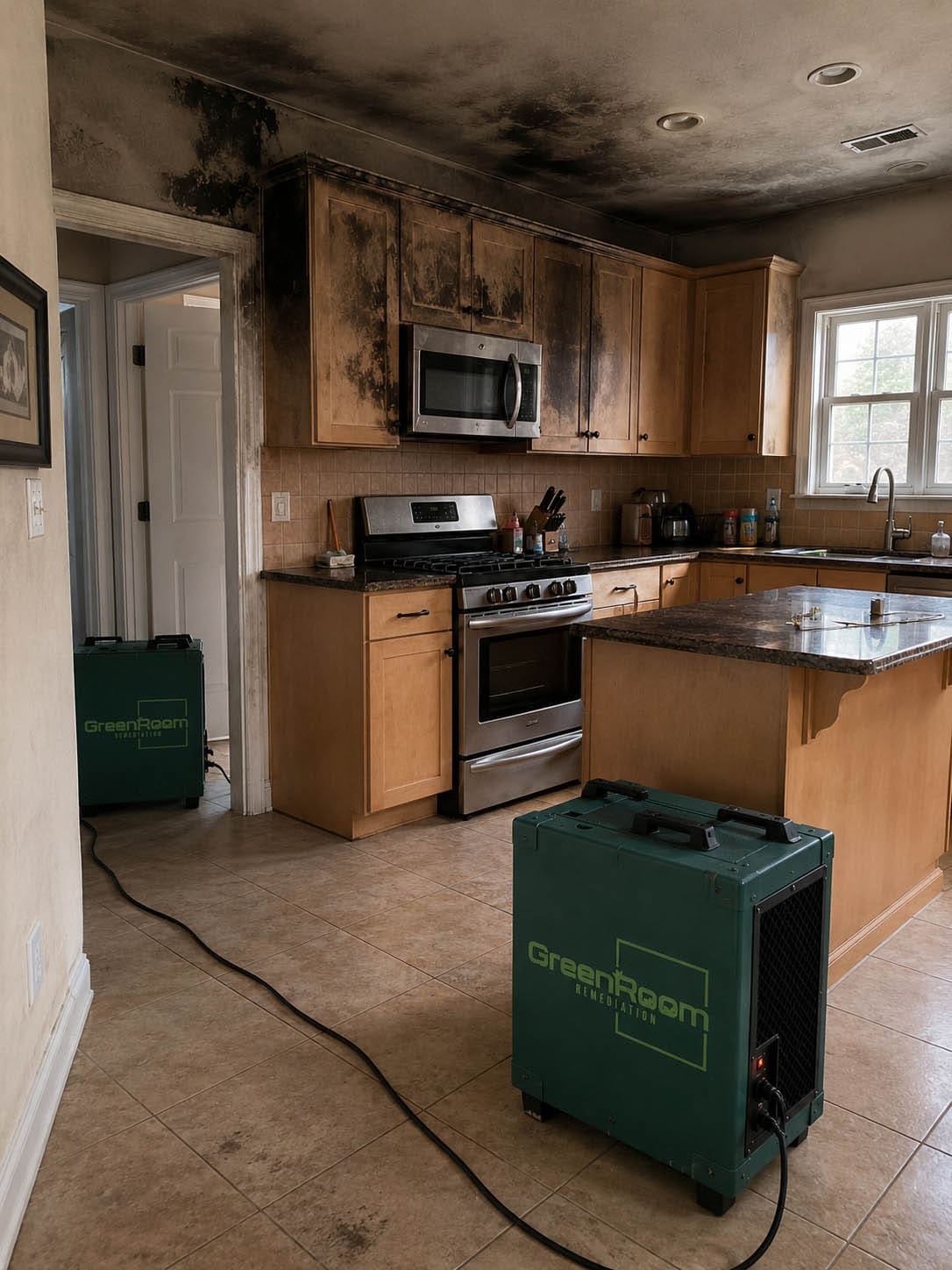
Fire & Smoke Damage Restoration Across NYC
GreenRoom Remediation responds to fire, smoke, soot, odor, water, and mold risk emergencies across New York City and nearby areas. We serve residential, commercial, and multi-unit properties throughout Brooklyn, Manhattan, Queens, the Bronx, Staten Island, Long Island, Westchester, and parts of New Jersey.
Fire and Smoke Damage Restoration FAQs
Yes. GreenRoom Remediation works with residential, commercial, and multi-unit properties across NYC. Commercial fire and smoke restoration may involve odor control, contents documentation, HVAC cleaning, water extraction, tenant coordination, and insurance support.
A puff back happens when an oil furnace or boiler misfires and pushes oily soot through a home, apartment, or building pathway. It can leave fine black residue on walls, ceilings, furniture, and contents. We clean puff back soot using methods designed for oily residue so it does not smear or spread during cleanup.
Yes. GreenRoom Remediation documents the loss, photographs affected areas, itemizes visible damage, and coordinates with insurance representatives when appropriate. Fire claims often involve several damage categories, so clear documentation from the beginning helps the process move more smoothly.
Some belongings can be cleaned and restored, while others may be too damaged by soot, heat, smoke, or water. We help identify salvageable contents, document affected items, and clean materials when restoration is realistic. This documentation can also support the insurance claim.
Mold can grow after a fire if moisture from firefighting remains trapped in drywall, flooring, insulation, or wall cavities. The risk is higher when water sits for 24 to 48 hours or longer. Proper extraction, drying, HEPA filtration, and moisture verification help reduce the chance of mold becoming a second problem.
Yes. Firefighting water can cause serious hidden damage after the flames are out. GreenRoom Remediation provides water extraction, moisture mapping, structural drying, and drying verification, and we can connect the cleanup to our water damage restoration process when the loss is significant.
In many cases, yes, but permanent smoke odor removal requires treating the source, not just masking the smell. Smoke can enter wall cavities, ductwork, insulation, contents, and porous surfaces. We use HEPA air scrubbing, targeted deodorization, hydroxyl treatment, and sealing methods when needed to stop odor from returning.
GreenRoom Remediation provides 24/7 emergency response for fire, smoke, soot, water, and odor damage across NYC. Response timing depends on location, building access, and current emergency volume, but the goal is to stabilize the property quickly, prevent further damage, and begin documentation for the insurance process.
Need Fire or Smoke Damage Help Now?
When fire and smoke turn your home or business upside down, you need a team that handles the soot, the odor, the water, and the mold risk in one coordinated response. GreenRoom Remediation is on call 24/7 across New York City. GreenRoom Remediation provides certified fire and smoke damage restoration across Brooklyn, Manhattan, Queens, the Bronx, and Staten Island, with emergency cleanup, odor removal, water extraction, drying, documentation, and mold prevention handled in one coordinated process.