table of contents
Quick Answer: Why Mold Keeps Coming Back in NYC Properties
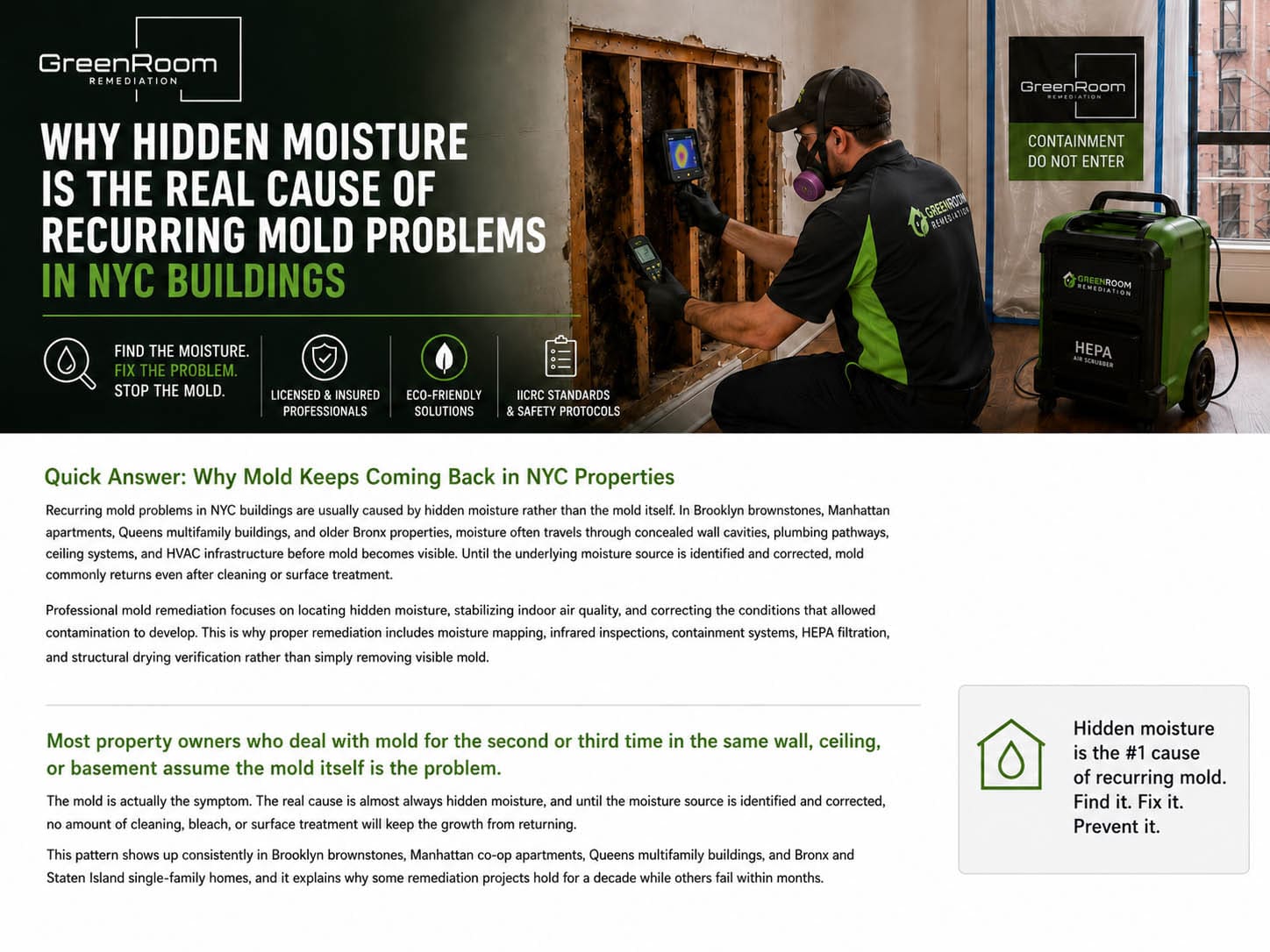
Recurring mold problems in NYC buildings are usually caused by hidden moisture rather than the mold itself. In Brooklyn brownstones, Manhattan apartments, Queens multifamily buildings, and older Bronx properties, moisture often travels through concealed wall cavities, plumbing pathways, ceiling systems, and HVAC infrastructure before mold becomes visible. Until the underlying moisture source is identified and corrected, mold commonly returns even after cleaning or surface treatment.
Professional mold remediation focuses on locating hidden moisture, stabilizing indoor air quality, and correcting the conditions that allowed contamination to develop. This is why proper remediation includes moisture mapping, infrared inspections, containment systems, HEPA filtration, and structural drying verification rather than simply removing visible mold.
Most property owners who deal with mold for the second or third time in the same wall, ceiling, or basement assume the mold itself is the problem. The mold is actually the symptom. The real cause is almost always hidden moisture, and until the moisture source is identified and corrected, no amount of cleaning, bleach, or surface treatment will keep the growth from returning.
This pattern appears consistently in Brooklyn brownstones, Manhattan co-op apartments, Queens multifamily buildings, and Bronx and Staten Island homes. It also explains why some remediation projects hold for a decade while others fail within months.
Hidden Moisture – Real Cause of Recurring Mold Problems in NYC | NYC Mold Remediation & Water Damage Restoration
How Moisture Moves Through Older NYC Construction
New York City housing stock is dominated by buildings constructed before modern moisture-management practices became standard. Pre-war brownstones, brick row houses, and mid-century apartment buildings all share the same vulnerability: aging plumbing systems, shared mechanical pathways, older masonry materials, and ventilation conditions that allow moisture to move unpredictably through the structure.
A plumbing leak two floors above can travel laterally along joists before becoming visible in a completely different apartment. HVAC condensate lines may overflow inside utility closets where nobody routinely checks for moisture. Shared exhaust risers can introduce humidity into wall cavities during cold weather conditions when warm indoor air condenses against colder structural surfaces.
These pathways are rarely visible during a casual inspection, which is why mold often appears in locations that seem random to the property owner. The growth follows the moisture path, not the visible layout of the room. A mold issue inside a third-floor bathroom of a Brooklyn brownstone may actually originate from a roof flashing failure several floors above.
Until the moisture pathway is identified, removing the visible mold usually only buys time.
These hidden moisture pathways are one of the primary reasons GreenRoom Remediation approaches mold inspection and mold remediation as part of a larger building investigation rather than a surface cleaning project. In NYC properties, moisture movement is often tied to aging infrastructure, shared plumbing systems, ventilation imbalances, and long-term humidity accumulation that may not become visible until contamination has already spread behind structural materials.
Why Surface Treatment Almost Always Fails
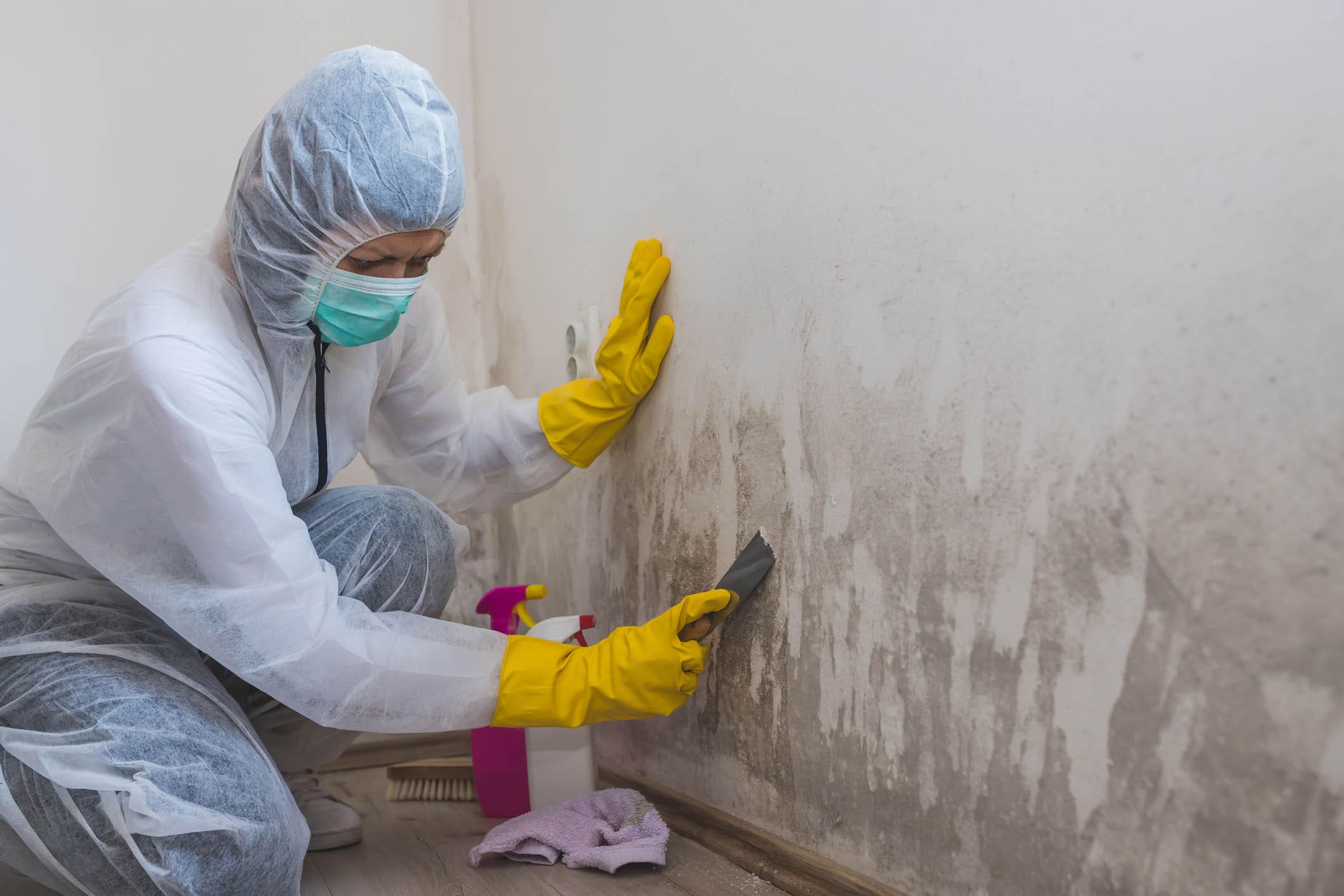
Bleach, vinegar, hydrogen peroxide, and over-the-counter mold removers all have one thing in common: they treat what is visible. None of them correct the environmental conditions that allowed mold to grow in the first place.
Spraying bleach on a stained wall may temporarily reduce visible growth or lighten the discoloration, but the underlying moisture remains unchanged. In many cases, the mold returns within weeks or months because the contaminated materials and moisture source were never addressed.
This is particularly common after emergency water damage events where surfaces may appear dry while moisture remains trapped inside framing, insulation, flooring systems, or HVAC pathways. In many NYC apartments and multi-unit buildings, these concealed moisture conditions allow microbial contamination to continue developing long after the original leak or flood appears resolved.
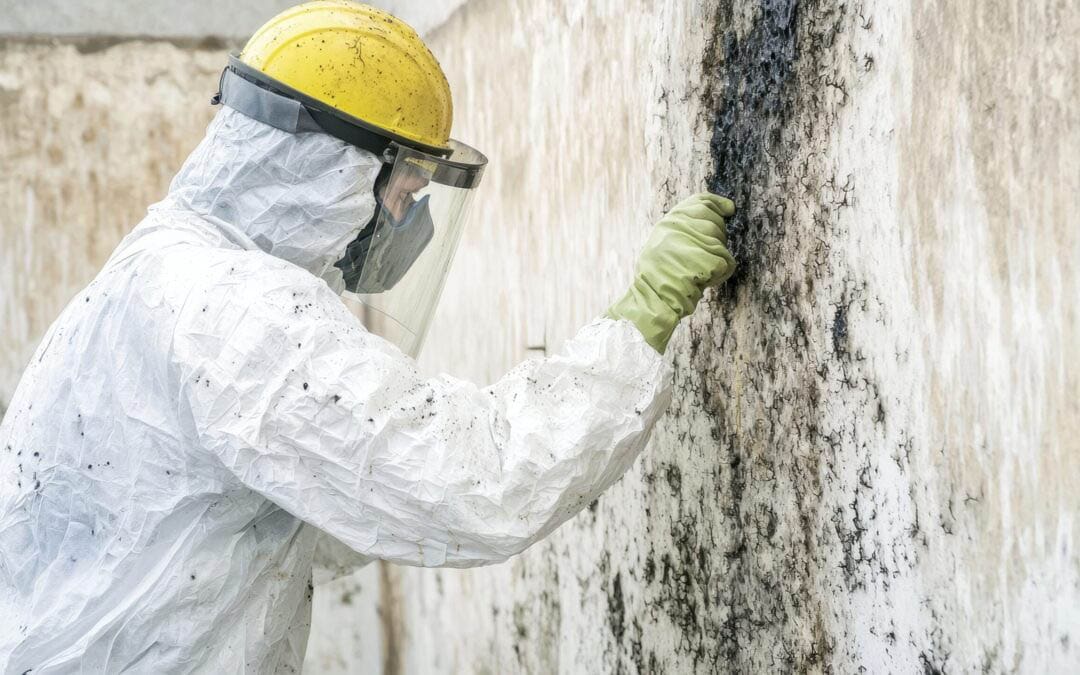
Professional mold remediation breaks this cycle by combining three critical elements that DIY treatment cannot provide:
- Physical removal of contaminated porous materials
- HEPA-filtered containment to prevent cross-contamination
- Identification and correction of the underlying moisture source
Without correcting the moisture issue, even professional cleaning only delays the next recurrence.
This is why professional remediation projects include moisture mapping, infrared scanning, structural drying verification, and post-remediation evaluation rather than simply cleaning visible surfaces.
What a Proper Moisture Investigation Looks Like
A complete moisture investigation begins with the building itself, not the visible mold.
A certified mold assessor reviews construction type, plumbing layout, HVAC systems, ventilation patterns, maintenance history, and prior water events before beginning remediation planning. Infrared imaging identifies temperature differentials that may indicate hidden moisture behind walls or ceilings, while moisture meters verify elevated readings inside structural materials.
Air sampling may also be performed to determine whether airborne spore levels exceed outdoor baseline conditions. Surface sampling helps identify contamination types when visible growth is present.
In NYC buildings, these investigations often uncover conditions property owners did not know existed:
- Slow plumbing leaks inside wall cavities
- Condensation forming on poorly insulated surfaces
- HVAC condensate drain failures
- Roof flashing or parapet leaks
- Building-envelope water intrusion around windows
Identifying these conditions is often what determines whether the remediation actually succeeds long term.
The Role of Mold Testing in Decision-Making
Mold testing is not simply about confirming whether mold exists. In NYC properties, testing serves several important purposes.
Testing may be used when occupants experience symptoms but the contamination source remains unclear. It may establish baseline conditions before remediation begins or provide clearance verification after remediation is complete. In some cases, mold testing is performed during real estate transactions or insurance disputes where third-party documentation becomes important.
Property owners who skip testing and move directly into cleanup often create complications later because they lack baseline documentation showing the original contamination scope.
Professional mold testing, indoor air quality evaluation, and moisture investigation help create a documented remediation strategy that protects both occupants and property owners.
What Effective Remediation Actually Includes
Professional mold remediation in NYC includes containment barriers, negative air pressure systems, HEPA-filtered air scrubbing, removal of contaminated porous materials, antimicrobial treatment of structural surfaces, and structural drying verified through moisture testing.
The sequence matters.
Skipping containment allows spores to spread into surrounding rooms. Failing to dry materials completely allows contamination to return. Ignoring HVAC systems or concealed wall cavities often leads to recurring mold conditions later.
Professional remediation also includes detailed documentation of moisture readings, affected areas, remediation procedures, and post-remediation verification.
New York State mold law requires licensed mold remediators for projects involving more than ten square feet of contamination, while IICRC S520 provides the industry-standard procedural framework followed by professional remediation companies.
The most important component of effective remediation remains moisture-source correction. Whether the issue involves a plumbing leak, inadequate ventilation, condensation, roof intrusion, or building-envelope failure, the underlying moisture condition must be corrected or the mold will eventually return.
What Property Owners Should Ask Before Hiring a Mold Company
NYC property owners considering mold remediation should verify several things before signing a contract.
The company should hold proper New York State licensing for mold remediation work. Property owners should also ask whether the project follows IICRC S520 standards and whether the remediation scope includes moisture diagnostics, containment procedures, and post-remediation documentation.
A professional remediation company should be able to provide:
- Moisture readings
- Infrared imaging documentation
- Containment procedures
- HEPA filtration protocols
- Detailed remediation scope
- Clearance recommendations when appropriate
When documentation, certifications, and remediation procedures all align, remediation projects typically hold long term.
When any of those elements are missing, the same walls, ceilings, or utility spaces often require remediation again within a relatively short period of time.
That difference is the reason professional mold remediation exists.
GreenRoom Remediation | NY State Licensed Mold Remediation Contractor (License #24-6S44B-SHMO) | IICRC-Certified | OSHA-Trained | BBB Accredited | Serving NYC, Brooklyn, Queens, Manhattan, the Bronx, Staten Island, Long Island, Westchester, and Surrounding Areas.
view related content