table of contents
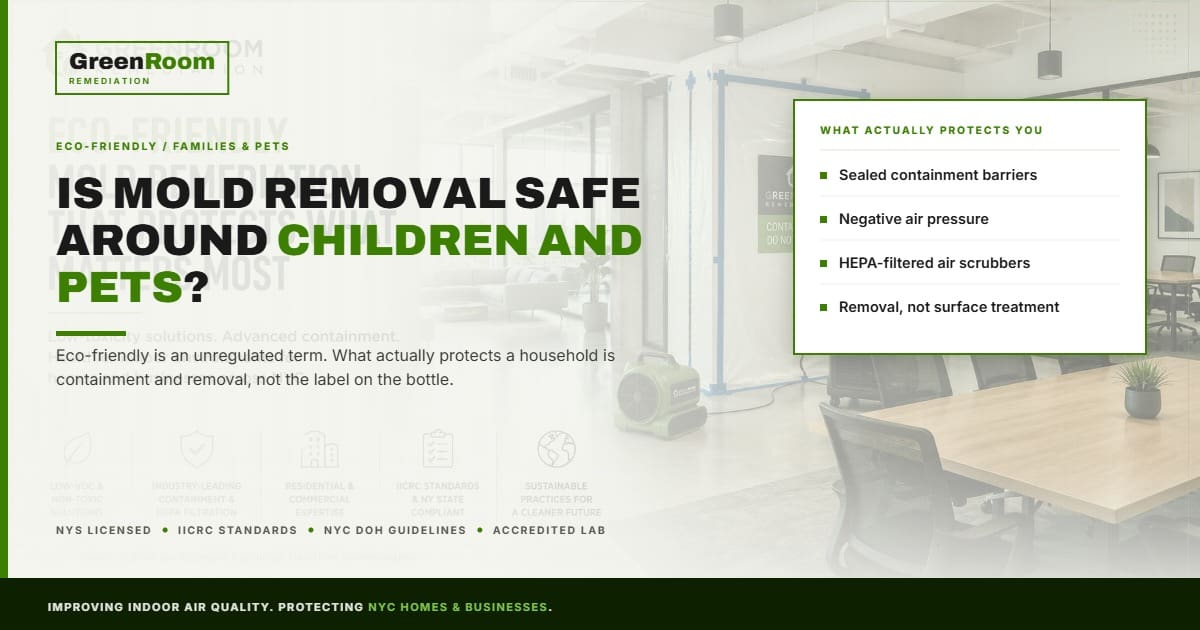
Quick answer: Mold removal can be performed safely around children and pets, but the safety comes from containment and physical removal rather than from the products used. The term eco-friendly is unregulated in this industry, so it carries no guaranteed meaning on its own. What actually protects a household is sealing the work area under negative air pressure, HEPA filtration, removing contaminated materials rather than treating them in place, and using low-VOC antimicrobials only as a finishing step. GreenRoom Remediation uses low-toxicity methods across NYC, Long Island, Westchester, and Northern New Jersey. Call (917) 965-3754 to discuss a specific property.
What Eco-Friendly Does Not Mean
No agency certifies a mold remediation company as eco-friendly. There is no standard behind the phrase, no audit, and no license attached to it. Any company can use it, and many do.
That does not make it meaningless when a company can explain what it refers to. It does mean the word alone tells you nothing, and that the follow-up question matters far more than the claim. Ask what specifically is different: which products, which methods, and what the company does instead of the conventional approach.
We go further into which methods hold up in our piece on NYC eco-friendly mold remediation. The honest version of the answer usually involves low-VOC or plant-derived antimicrobials, avoidance of chlorine bleach, and careful attention to what is released into the air during the work. The version worth being skeptical of is a green label attached to an otherwise conventional process.
The Part That Actually Protects Your Household
Here is the point most marketing misses. During mold removal, the greatest exposure risk to a child or a pet is not the cleaning product. It is the airborne spore load released when contaminated material is disturbed.
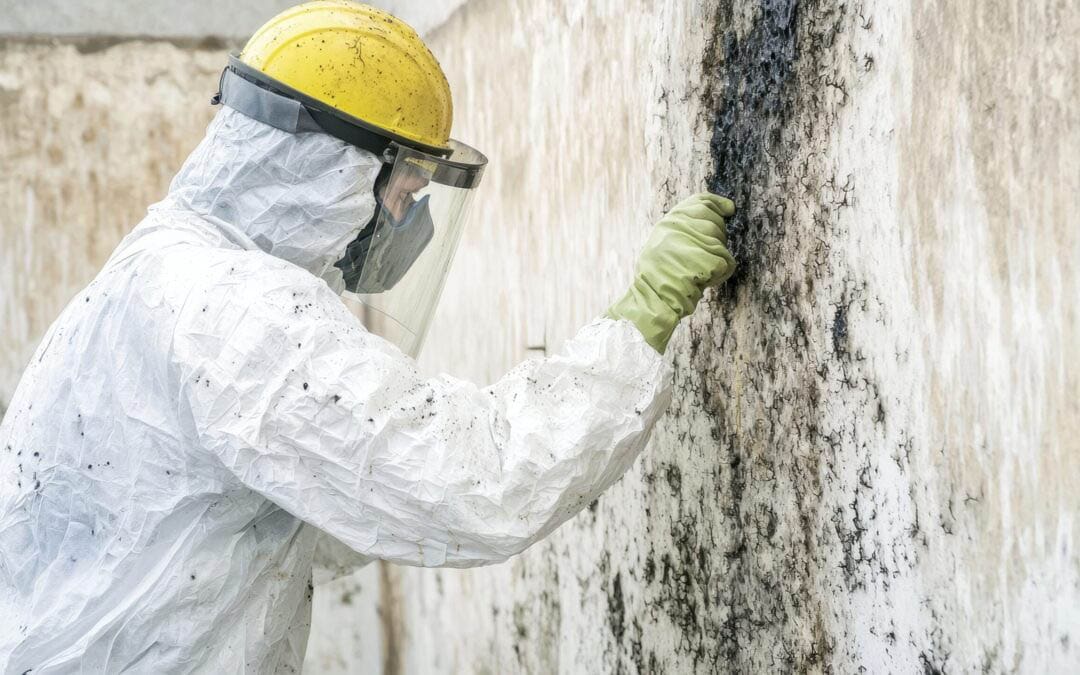
Cutting into a mold-affected wall aerosolizes an enormous quantity of spores. If that happens in an open room, those spores travel through the apartment, settle on soft furnishings, and get pulled into the HVAC system. A perfectly non-toxic cleaning solution applied in an uncontained room is far more hazardous to a household than a conventional product applied inside proper containment.
So the questions that actually determine safety are about process. Is the work area sealed with polyethylene barriers? Is negative air pressure established so air flows into the containment and not out of it? Are HEPA-filtered air scrubbers running throughout? Are HVAC returns in the affected area sealed off? Is contaminated material bagged inside containment before it is carried out?
Why Removal Beats Treatment
A recurring claim in the lower end of this market is that a spray, fog, or chemical treatment can resolve mold without removing anything. For porous materials this does not hold up. Mold growing in drywall, insulation, carpet backing, or ceiling tile has hyphae embedded through the material. Killing surface growth leaves the structure and the allergenic proteins in place.
Dead mold still triggers allergic and asthmatic responses, which is why the health risks of mold exposure persist after a surface looks clean. This matters specifically for households with children, because the health concern is largely immunological rather than infectious. A treatment-only approach can produce a clean-looking wall that still provokes symptoms.
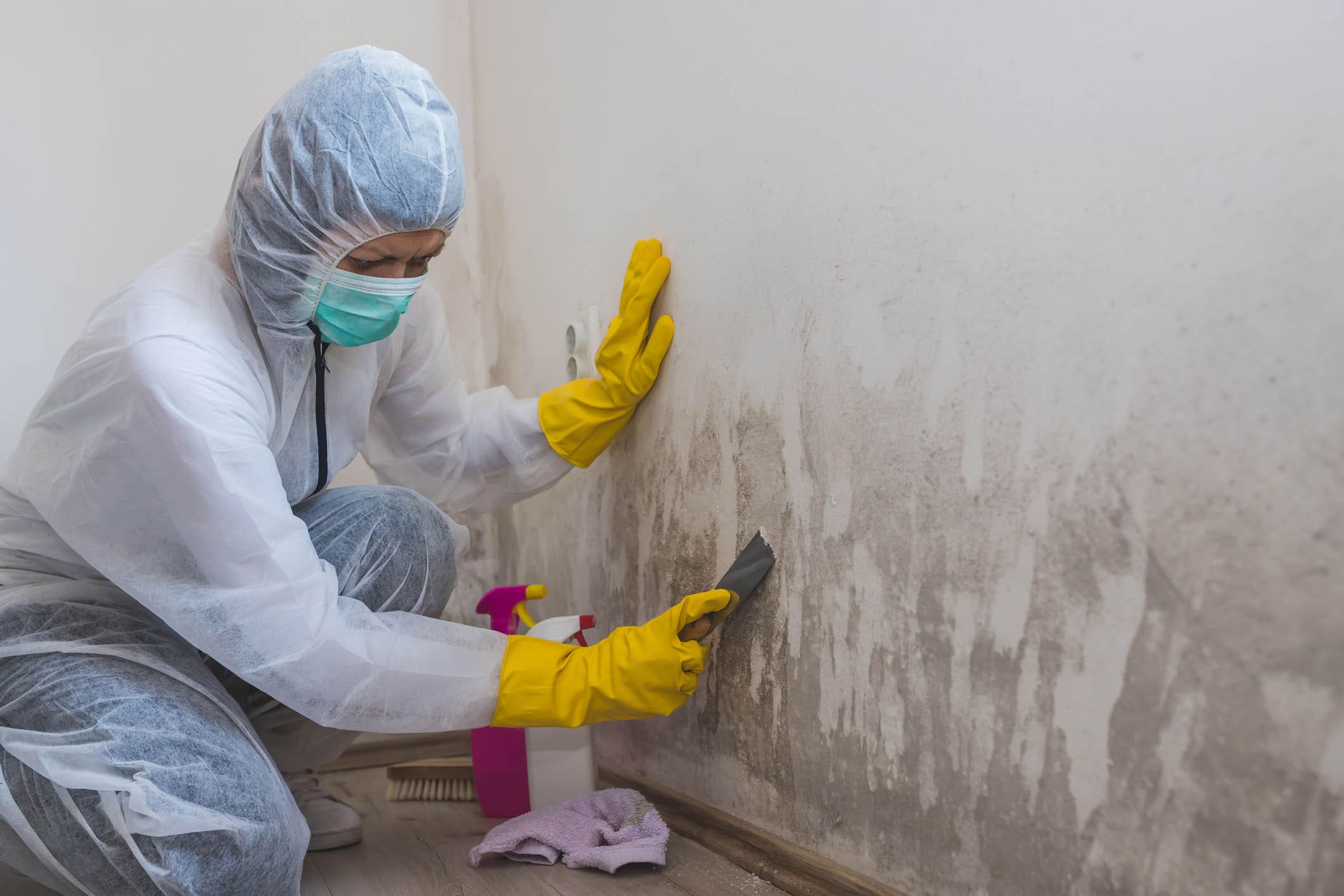
Physical removal of affected porous material, followed by HEPA vacuuming and wipe-down of remaining surfaces, is what actually reduces the burden. Antimicrobial application is a finishing step on sound surfaces, not a substitute for taking the contaminated material out.
Practical Steps for Families and Pet Owners
- Ask whether occupants need to relocate during the work. For contained work in a single room, often not. For extensive contamination or work involving shared HVAC, frequently yes, at least during active removal.
- Move pets well away from the work zone. Birds are especially sensitive to airborne particulates and fumes and should be relocated entirely.
- Ask for low-VOC or plant-derived products specifically if anyone in the household has asthma, chemical sensitivity, or respiratory conditions. This is a reasonable request and any competent contractor can accommodate it.
- Confirm that soft furnishings, bedding, and toys in adjacent rooms are covered or removed before work begins.
- Ask when the space is safe to reoccupy, and what evidence supports that answer.
That last point is where independent clearance testing earns its cost. A written clearance result comparing indoor spore counts against an outdoor baseline is objective evidence that a room is safe for a child to sleep in again.
When Symptoms Are the Reason You Are Calling
Many households first suspect mold because someone is unwell. Persistent congestion, coughing, worsening asthma, or symptoms that ease when the family is away from home are common patterns.
Testing establishes whether mold is present and at what concentration. It does not diagnose anyone, and no remediation company should attempt to. If symptoms are the driver, the medical side belongs with a clinician, and we set out what to bring to that conversation in our article on mold exposure and when to see a doctor. The environmental side and the clinical side answer different questions, and you want both.
Frequently Asked Questions
Is bleach a safe option for mold in a home with children?
Bleach is a poor choice for two separate reasons. On porous materials it does not reach the growth embedded below the surface, so it addresses appearance rather than the problem. It also releases irritant fumes in enclosed spaces and reacts dangerously with ammonia-based cleaners. For households with children or asthma, it is one of the less suitable options available.
How long after remediation is it safe for children to return?
Rather than a fixed number of hours, the answer should come from evidence. Once active removal is finished, the space is dried and HEPA cleaned, and clearance sampling shows indoor spore counts in line with the outdoor baseline, the room is safe to reoccupy. For most contained residential jobs this falls within a few days, but the clearance result is what confirms it, not the calendar.
Are green products less effective at killing mold?
For the finishing step on sound, non-porous surfaces, low-VOC and plant-derived antimicrobials perform well. Effectiveness in remediation comes overwhelmingly from containment, removal, and drying rather than from the chemistry of the final wipe-down, which is why the product choice can prioritize low toxicity without compromising the outcome.
For an assessment of a property where children, pets, or anyone with respiratory sensitivity is living, call GreenRoom Remediation on (917) 965-3754.
GreenRoom Remediation | NY State Licensed Mold Remediation Contractor (License #24-6S44B-SHMO) | IICRC-Certified | OSHA-Trained | BBB Accredited | Serving NYC, Brooklyn, Queens, Manhattan, the Bronx, Staten Island, Long Island, Westchester, and Surrounding Areas.
view related content