table of contents
Quick Answer: What Eco-Friendly Mold Remediation Really Means
Eco-friendly mold remediation in NYC is not simply about using “green” cleaning products. Effective remediation still requires containment barriers, HEPA filtration, moisture mapping, structural drying, and professional removal of contaminated materials. The difference is that eco-friendly remediation uses low-VOC, plant-derived, or EPA-registered antimicrobial products designed to reduce chemical exposure while maintaining the same remediation standards required under New York State Mold Laws and IICRC guidelines.
For occupied NYC apartments, brownstones, co-op units, and multifamily buildings, this matters because limited ventilation and shared HVAC systems can amplify chemical residue concerns after remediation. A properly executed eco-friendly remediation project focuses on both contamination removal and indoor air quality stabilization.
NYC Eco-Friendly Mold Remediation – What Actually Works and What Does Not | NYC Mold Remediation & Water Damage Restoration
The Growing Demand for Eco-Friendly Mold Remediation in NYC
The market for eco-friendly mold remediation has grown substantially throughout Brooklyn, Manhattan, Queens, the Bronx, and Staten Island over the past several years. Families with young children, pet owners, chemically sensitive occupants, and co-op boards increasingly want remediation approaches that reduce harsh chemical exposure while still addressing contamination properly.
The interest is legitimate. The confusion comes from the marketing.
Many property owners researching green mold remediation online encounter conflicting information that makes it difficult to separate professional remediation from surface-level cleaning advice. Some companies market household products as “natural remediation,” while others position eco-friendly work as a shortcut that eliminates the need for containment or HEPA filtration.
In reality, effective eco-friendly mold remediation still follows the same structural remediation principles as conventional remediation. The product choice changes. The remediation standards do not.
GreenRoom Remediation approaches eco-friendly mold remediation as a full environmental remediation process that prioritizes indoor air quality, low-toxicity antimicrobial treatment, and long-term moisture control without compromising professional remediation standards.
What Eco-Friendly Mold Remediation Actually Means
Effective eco-friendly mold remediation is not defined solely by the antimicrobial products being used. It is defined by the combination of product selection, containment procedures, air quality management, moisture diagnostics, and controlled remediation protocols throughout the project.
Plant-derived antimicrobials, low-VOC formulations, and EPA-registered green-certified solutions are what distinguish eco-friendly remediation at the product level. These products are designed to reduce acute chemical exposure, minimize residual odors, and lower environmental impact during and after the remediation process.
However, the remediation outcome itself still depends primarily on physical removal and moisture correction.
Mold colonies grow because moisture remains present inside structural materials. Regardless of which antimicrobial product is selected, remediation still requires containment barriers, HEPA-filtered air scrubbing, controlled demolition of contaminated materials, structural drying verification, and moisture-source correction.
This is one of the biggest misconceptions property owners encounter when comparing eco-friendly mold remediation services in NYC.
Why Product Selection Matters in NYC Apartments and Multifamily Buildings
New York City buildings create unique indoor air quality concerns during remediation projects.
Many Brooklyn brownstones, Manhattan co-op apartments, and Queens multifamily properties have limited cross-ventilation, older HVAC infrastructure, shared wall cavities, and tightly enclosed living spaces. Conventional remediation chemicals used in these environments may leave lingering VOCs inside fabrics, carpeting, furniture, mattresses, and porous finishes long after the remediation work is complete.
For families remaining inside the property during the work, this can create prolonged low-level exposure concerns.
Low-VOC and plant-derived antimicrobial products significantly reduce this issue while still supporting professional remediation outcomes. Post-remediation air quality testing often shows lower residual chemistry levels compared to more aggressive conventional chemical approaches.
For households with children, pets, respiratory sensitivities, or chemical sensitivities, the difference can materially affect the post-remediation recovery experience.
What Eco-Friendly Mold Remediation Does NOT Mean
Property owners should approach several common “green remediation” claims with caution.
Vinegar, baking soda, hydrogen peroxide, and tea tree oil are not substitutes for professional mold remediation, regardless of how they are marketed online. While some of these products may temporarily reduce minor surface staining, they do not replace containment systems, HEPA filtration, moisture diagnostics, or structural remediation.
More importantly, they do not address hidden moisture conditions inside wall cavities, flooring systems, insulation, or HVAC pathways where mold colonies commonly develop after water damage events.
A legitimate eco-friendly remediation process still follows professional remediation protocols under New York State Mold Laws and IICRC S520 guidelines.
Similarly, no antimicrobial product eliminates the need for containment barriers or physical removal of contaminated porous materials. Any contractor suggesting that “green products” allow shortcuts in the remediation process is not describing complete mold remediation.
The product choice changes. The remediation process remains professional and controlled.
How a Proper Eco-Friendly Remediation Project Works
A professional eco-friendly mold remediation project follows the same overall remediation sequence used in conventional professional remediation.
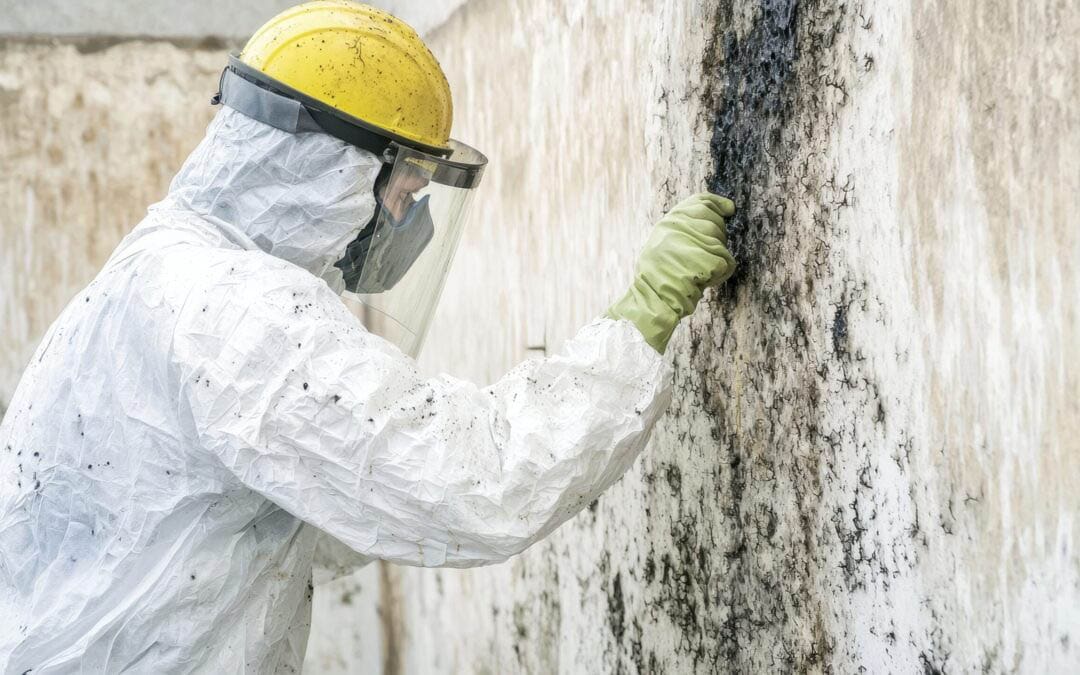
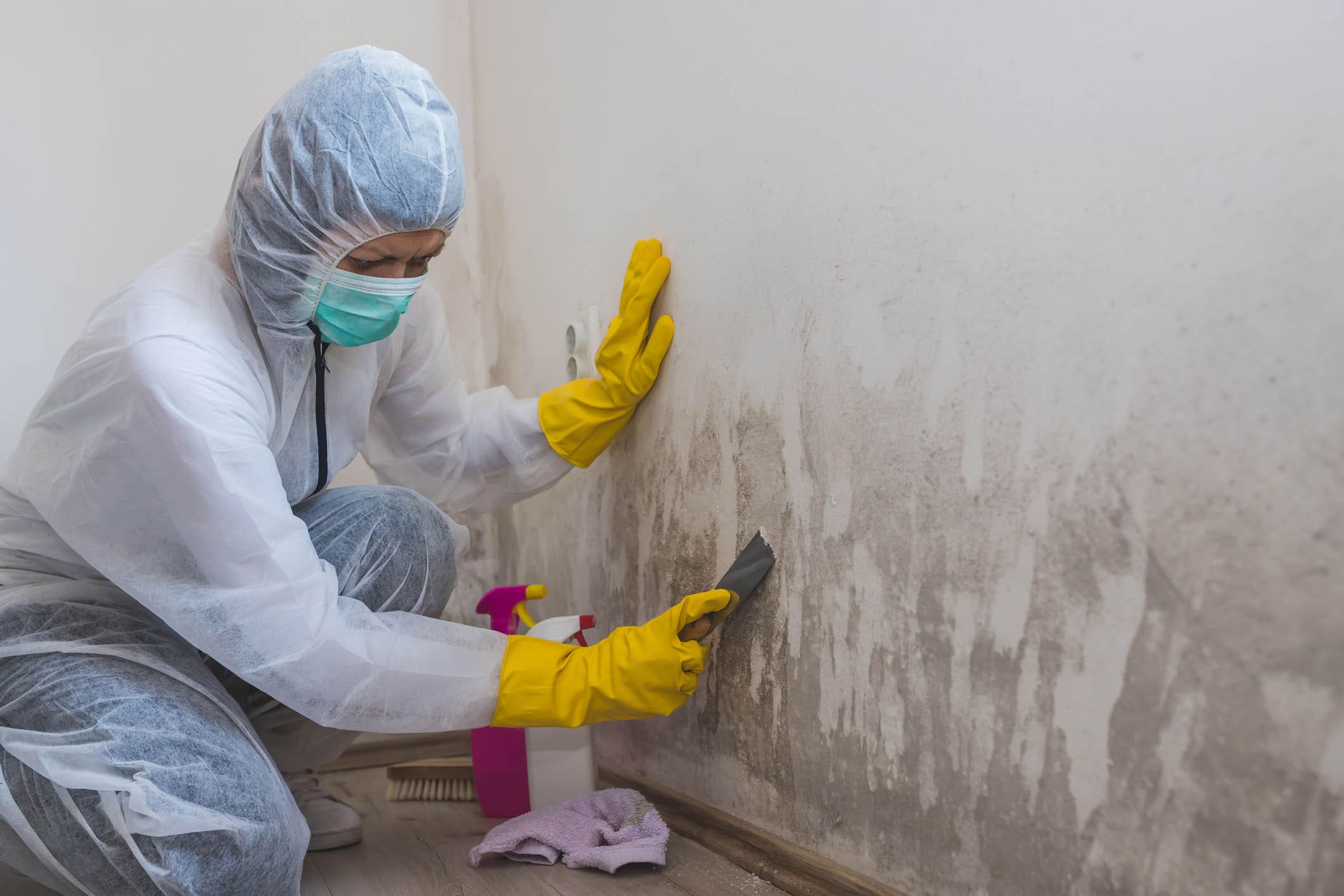
The process begins with moisture investigation and contamination assessment. Containment barriers are installed using negative air pressure systems to prevent cross-contamination between rooms or neighboring units. HEPA-filtered air scrubbers operate continuously during the work to stabilize airborne particulate levels.
Contaminated porous materials are removed and disposed of under controlled conditions. Structural surfaces are then treated using EPA-registered low-VOC or plant-derived antimicrobial products selected specifically for occupied indoor environments.
The structure is dried using calibrated dehumidification and air movement systems while moisture readings verify progress throughout the drying process.
The eco-friendly element extends beyond the antimicrobial products themselves. Equipment selection considers occupant comfort, indoor air quality impact, and sustainable disposal practices. Dust suppression procedures minimize aerosolized contamination during demolition. Post-remediation air quality evaluation helps confirm the work did not introduce new chemical exposure concerns into the property.
This integrated process is what separates legitimate eco-friendly remediation from marketing-focused positioning.
Cost Considerations for Eco-Friendly Mold Remediation
Eco-friendly mold remediation does not automatically cost more than conventional remediation.
In most cases, plant-derived and low-VOC antimicrobial products are priced similarly to conventional biocides. The primary project costs still involve labor, containment setup, HEPA filtration, demolition, drying equipment, and documentation.
When property owners receive dramatically higher quotes for eco-friendly remediation, it is important to understand exactly what is driving the pricing difference. In some situations, the additional cost reflects marketing rather than material differences.
Where eco-friendly remediation can create indirect savings is occupancy management.
Families often avoid temporary relocation costs because lower-VOC remediation approaches allow adjacent spaces to remain occupied more comfortably during and after the work. In NYC properties where temporary relocation is expensive and logistically difficult, this operational advantage matters significantly.
Choosing the Right Team for Eco-Friendly Mold Remediation
Property owners evaluating eco-friendly mold remediation companies should verify the same core credentials required for any professional remediation project.
This includes New York State mold remediation licensing, IICRC S520 alignment, appropriate insurance coverage, moisture diagnostics capability, HEPA filtration procedures, and documented containment protocols.
From there, the eco-friendly specifics become important:
- Which EPA-registered antimicrobial formulations are being used
- Whether the products are low-VOC or plant-derived
- Whether documentation is available for the formulations
- Whether the project still includes full containment and HEPA filtration
A company that performs eco-friendly remediation properly will be able to explain product choices clearly, document the reasoning behind them, and produce the same professional remediation outcomes expected from conventional remediation.
The difference is not whether the remediation is “green.”
The difference is whether the remediation is complete.
GreenRoom Remediation | NY State Licensed Mold Remediation Contractor (License #24-6S44B-SHMO) | IICRC-Certified | OSHA-Trained | BBB Accredited | Serving NYC, Brooklyn, Queens, Manhattan, the Bronx, Staten Island, Long Island, Westchester, and Surrounding Areas.
view related content