table of contents
Quick Answer: Why HVAC Systems Must Be Evaluated After Mold Remediation in Multi-Unit NYC Buildings
After mold remediation in apartment buildings, HVAC systems must be evaluated to prevent cross-contamination between units. In New York City’s interconnected residential structures, duct systems can circulate residual spores if they are not inspected and sanitized when necessary. GreenRoom Remediation works with landlords, co-op boards, and property managers to ensure remediation projects address both structural contamination and air distribution pathways.
For property managers, incomplete remediation can lead to recurring tenant complaints, indoor air quality concerns, and potential liability. HVAC evaluation is a critical part of responsible building oversight following contamination events.
How HVAC Systems Spread Contamination in Apartment Buildings
In multi-unit NYC properties, ventilation systems often connect apartments vertically and horizontally. When mold contamination exists prior to containment, spores may enter shared duct pathways. Even after visible mold removal, contaminated air systems can reintroduce particulates into living spaces.
This is particularly common in Manhattan high-rises and larger residential complexes in Brooklyn and Queens, where centralized air handlers serve multiple floors. Without inspection, property managers may unknowingly allow distribution systems to compromise otherwise successful mold remediation in apartment buildings.
The Role of HVAC Systems After Emergency Water Damage
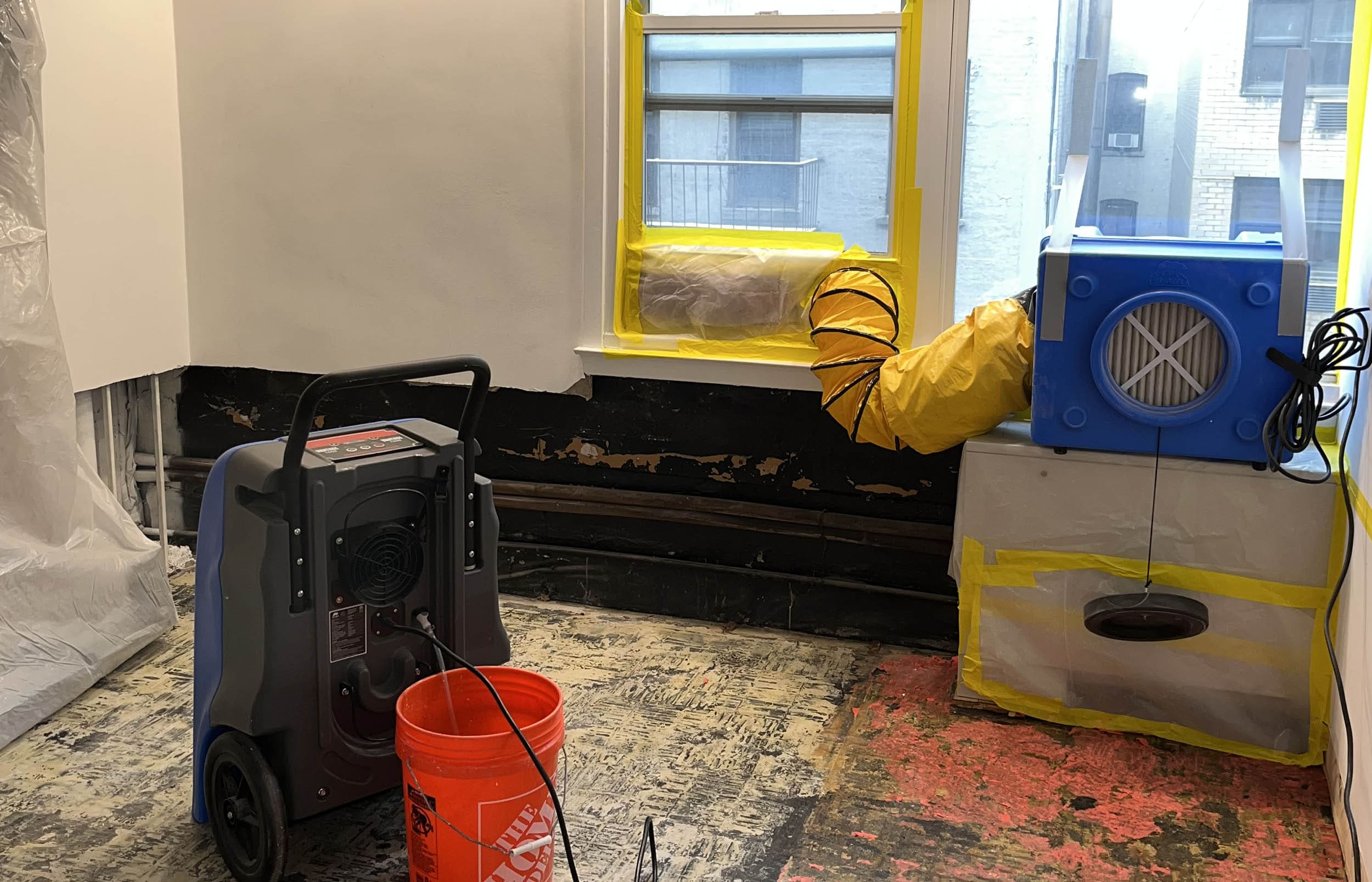
Flooding and plumbing failures frequently precede mold conditions. After emergency water damage restoration in NYC, elevated humidity and contaminated air can enter duct systems if mechanical rooms are not properly evaluated.
Basement-level systems in the Bronx, Queens, and parts of Brooklyn are especially vulnerable when groundwater intrusion affects mechanical infrastructure. If air handlers are reactivated before sanitation, residual moisture may create conditions for microbial growth inside concealed ductwork.
Coordinating HVAC evaluation alongside structural drying reduces the likelihood of secondary mold complaints weeks or months later.
When Environmental Decontamination Requires HVAC Review
When properties undergo environmental decontamination services due to sewage intrusion, biohazard exposure, or contaminated floodwater, air systems must be assessed as part of the overall remediation scope.
Contaminants can migrate through air pathways during the initial event or during uncontrolled airflow prior to containment. Property managers should ensure remediation plans include review of duct systems when contamination severity warrants it.
GreenRoom Remediation approaches HVAC sanitation as an extension of decontamination protocols rather than as a standalone cleaning service. This ensures contamination sources and distribution systems are addressed together.
Documentation, Liability, and Long-Term Building Health
In NYC’s regulated housing environment, documentation matters. Property managers must demonstrate that remediation efforts were comprehensive and professionally managed. Ignoring ventilation systems after mold remediation or water damage can create recurring exposure concerns and tenant disputes.
By incorporating HVAC assessment into remediation planning, property managers reduce the risk of:
- Repeat mold complaints
- Cross-unit contamination
- Indoor air quality disputes
- Insurance complications
- Long-term structural deterioration
GreenRoom Remediation coordinates structural remediation, duct evaluation, and environmental recovery strategies to protect both occupant health and property value.
Protecting Multi-Unit Properties in NYC’s Dense Building Environment
In New York City, buildings operate as interconnected systems. Air circulation cannot be separated from structural remediation. After mold remediation, water damage, or decontamination projects, ventilation pathways should be evaluated to ensure contamination has not migrated beyond the initial work zone.
GreenRoom Remediation provides coordinated remediation planning for landlords, co-op boards, and building managers throughout Brooklyn, Manhattan, Queens, the Bronx, Staten Island, and Nassau County. This structured approach strengthens long-term building health and reduces liability exposure.
GreenRoom Remediation | NY State Licensed Mold Remediation Contractor (License #24-6S44B-SHMO) | IICRC-Certified | OSHA-Trained | BBB Accredited | Serving NYC, Brooklyn, Queens, Manhattan, the Bronx, Staten Island, Long Island, Westchester, and Surrounding Areas.
view related content