Quick answer: For an overnight water damage emergency in NYC, call GreenRoom at (917) 965-3754 with your address, the water source if known, affected rooms and building access details. We confirm current crew availability and the next step. Emergency work can include water extraction, moisture checks, affected-material evaluation and structural drying. Arrival time and the work required depend on the conditions at your property.
Need help now? See our 24/7 emergency water damage response service for Brooklyn, Manhattan, Queens, the Bronx and Staten Island. Call for urgent assistance; online requests are not monitored continuously.
A burst pipe, overflowing appliance or leak from an upstairs apartment can leave you deciding whom to call in the middle of the night. This guide explains what information helps, how emergency mitigation begins and what to expect as drying continues.
What happens when you call at 2 AM?
The first conversation helps establish the source, extent of damage and access needed. Be ready to share:
- Your location: street address, borough, ZIP code, floor and unit number.
- What happened: when you noticed the water, whether it is still entering and whether its source is known.
- Affected areas: rooms, ceilings, walls, flooring and any standing water.
- Who is involved: building management, a superintendent, plumber or emergency responders.
- Access: who can authorize entry, elevator availability and any building restrictions.
Tell us if water may have reached another unit or floor. In a multifamily building, access to the source and the affected spaces can be as important as access to your own apartment. We discuss availability directly; a call does not guarantee a fixed arrival time.
Should you call a plumber or a water damage company?
A plumber or building staff may be needed to stop an active plumbing leak. GreenRoom’s mitigation work focuses on removing water, reviewing wet materials and planning drying. Plumbing repairs and later reconstruction may need separate scopes or contractors.
If there is an immediate threat to life or safety, contact emergency services first. Keep out of areas with suspected electrical or structural hazards. Do not touch wet electrical equipment or enter standing water to reach a switch or valve. See EPA’s flooded-home guidance for safety considerations.
What does the response team bring?
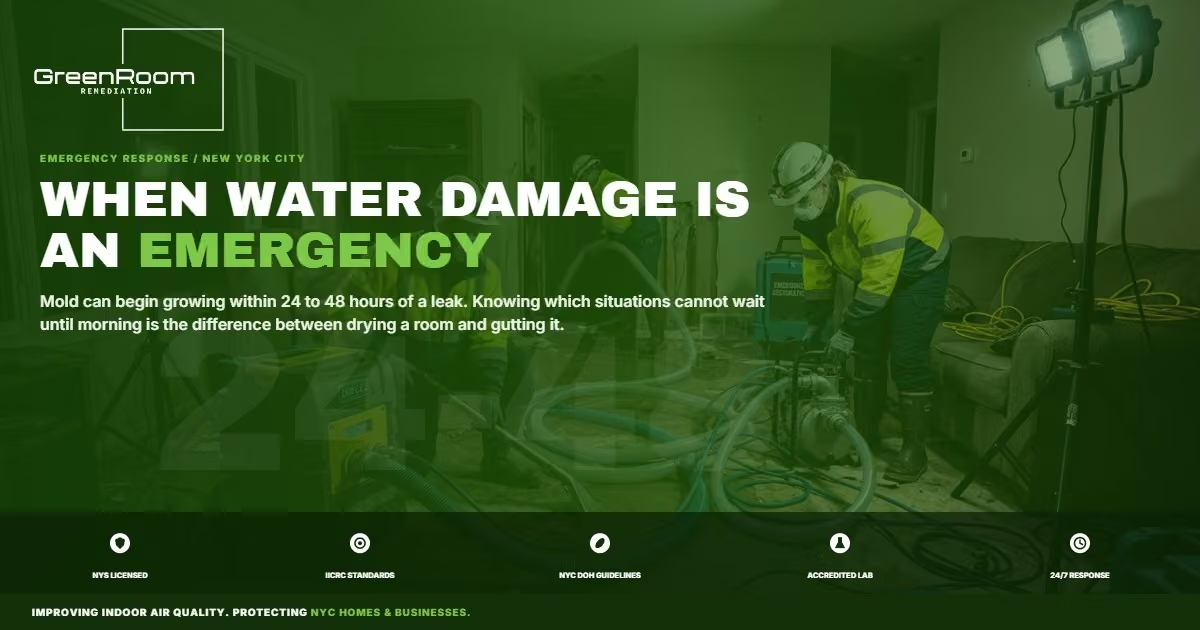
Equipment is selected for the reported conditions and adjusted after the accessible affected areas are reviewed. Depending on the job, this can include water extraction equipment, moisture meters, dehumidifiers, air movers and materials to protect surrounding areas.
The goal is to understand where moisture remains and choose an appropriate drying plan. Removing visible water is only one part of the work: flooring, wall cavities and other materials can require further evaluation. Our water damage restoration page explains the process and shows project photos.
What happens when the team arrives?
Review conditions and define the scope
We review accessible affected areas, the reported water source and the access needed for the work. The proposed scope can include extraction, protection, drying equipment and material removal where appropriate. Conditions requiring another trade or a separate investigation are discussed with you.
Document the affected areas
Photos, scope details and relevant moisture readings create a record of the work. When it is safe, photograph damage before cleanup and keep emergency-repair receipts. New York DFS recommends documenting losses and reporting claims promptly. Your insurer determines coverage; project records do not guarantee payment.
Extract water and evaluate materials
Accessible standing water is removed as conditions allow. The water source, contamination concerns, time wet and material condition all affect what can be cleaned and dried and what may need removal. Tell the team about drain backups or unknown water sources before work begins.
Set up drying and explain the next steps
Drying equipment is positioned for the affected materials and conditions. The team explains the equipment plan, monitoring and access arrangements. Cleaning products are selected for the job and used according to their labels; botanical and low-VOC options are prioritized where appropriate. Product application does not replace water removal or drying.
What should property owners do while waiting?
- Stay out of unsafe areas and keep children and pets away from the affected space.
- Notify your building contact, especially when the source or damage involves another unit.
- Gather photos taken from a safe location, your contact details and information about when the leak started.
- Contact your insurer promptly and ask what documentation and approvals your policy requires.
- Keep a record of calls, repair receipts and changes in the conditions.
EPA recommends drying water-damaged areas and belongings as quickly as possible, ideally within 24–48 hours where feasible, to reduce mold risk. If you see mold, do not use fans that could spread it. Follow the precautions in EPA’s cleanup guidance and get help when cleanup is unsafe or beyond your capabilities.
What happens over the following days?
Our water mitigation vs. restoration guide explains the distinction between stabilizing the affected area and completing later repairs.
Structural drying is guided by material conditions and moisture readings. The monitoring schedule, equipment adjustments and access requirements are discussed for your project. Drying time varies; a fixed number of days is not a substitute for checking the materials.
Once the mitigation work has been reviewed, remaining repairs or reconstruction can be planned separately. If mold is suspected, we explain the next step and any need for a separate assessment and remediation scope. Learn more about mold remediation and our licenses and credentials.
For nonurgent budget planning, see our NYC water damage restoration cost guide. The written proposal should identify the approved work, equipment and any separate repair scope.
Frequently asked questions
How quickly can GreenRoom respond to a water emergency in NYC?
GreenRoom offers 24/7 emergency service across NYC’s five boroughs. Call (917) 965-3754 to confirm current availability. Timing depends on location, demand, property conditions and access.
Do I need insurance to request water damage help?
You can contact us whether or not you plan to make an insurance claim. We discuss the proposed work and scope directly with you. If you are filing a claim, ask your insurer about coverage and documentation requirements. Our water damage documentation guide explains which project records to organize.
What if water has reached the unit below?
Tell building management and let us know which spaces may be affected. Access to more than one unit may be needed to understand the extent of the moisture and plan the work. We discuss access and documentation with the property’s authorized contacts.
What if I discover the damage days later?
Tell us when you discovered it, how long the property was unattended and whether you notice odors or visible growth. Wet materials may need evaluation for mold as well as drying. Document what you know accurately; the elapsed time alone does not establish the complete scope.
Need emergency water removal in NYC? Call (917) 965-3754 to discuss your property and current availability. For a nonurgent project, request a free initial quote.
GreenRoom Remediation | NY State Licensed Mold Remediation Contractor (License #25-6S44B-SHMO) | IICRC-Certified | OSHA-Trained | BBB Accredited | Serving NYC, Brooklyn, Queens, Manhattan, the Bronx, Staten Island, Long Island, Westchester, and Surrounding Areas.
view related content