Quick answer: EPA guidance holds that a mold patch smaller than about ten square feet can generally be cleaned by a property owner, and that larger areas warrant professional help. New York licensing requirements, exemptions and NYC building rules must also be considered; patch size alone does not decide who may perform the work. Beyond size, three conditions should send the job to a professional regardless of how small it looks: contaminated water as the source, mold inside HVAC, and anyone in the household with asthma or a compromised immune system. GreenRoom Remediation serves Brooklyn, Manhattan, Queens, the Bronx and Staten Island. Call (917) 965-3754 if you are unsure which side of the line your situation falls on.
The Ten Square Foot Rule and What It Actually Means
The EPA homeowner cleanup guide says an area smaller than about ten square feet can often be handled by the homeowner, depending on the circumstances. This is cleanup guidance, not a universal exemption from local work requirements.
New York licensing rules and homeowner cleanup guidance address different questions. Article 32 includes owner and certain agent or employee exemptions. Separately, NYC HPD requires independent licensed assessment and remediation for more than ten square feet of mold in residential properties with ten or more units. Check the applicable building and work requirements before starting; a small visible patch alone does not establish an exemption.
One caveat that catches people out: the measurement is of what exists, not what is visible. Surface staining is frequently the smaller part of the problem. If a two square foot patch on the drywall face reflects contamination running through the cavity behind it, the job was never a ten square foot job.
When DIY Is Genuinely Reasonable
Small, isolated growth on a cleanable hard surface may be suitable for household cleanup once the moisture source is addressed. Glazed tile differs from grout, caulk, wood and absorbent backing materials; do not assume every bathroom or window surface is nonporous. Deteriorated materials may need replacement. Mold color alone does not determine the response.
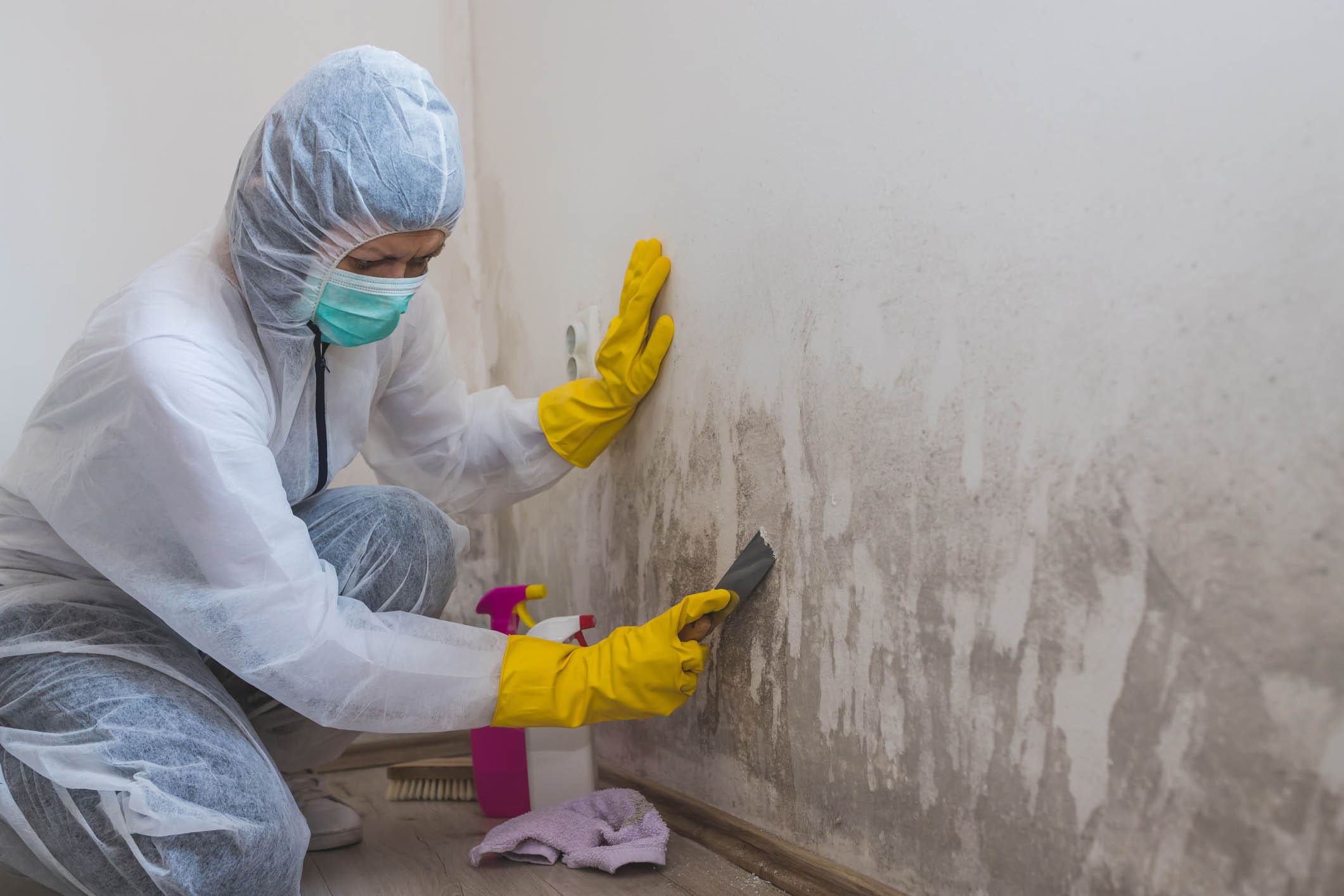
For appropriate small household cleanups, follow the EPA precautions: avoid breathing mold, use suitable gloves, eye protection and a properly fitted N95 respirator, and clean hard surfaces with detergent and water before drying completely. Follow product directions and never mix cleaning chemicals. People with health concerns should seek medical advice before participating in cleanup.
Fixing the cause is the part homeowners skip most often. A bathroom fan that vents into a ceiling void rather than outside, a window with failed weatherstripping, a radiator pipe sweating behind a vanity. Our article on hidden moisture and recurring mold covers how to trace these.
When DIY Makes Things Worse
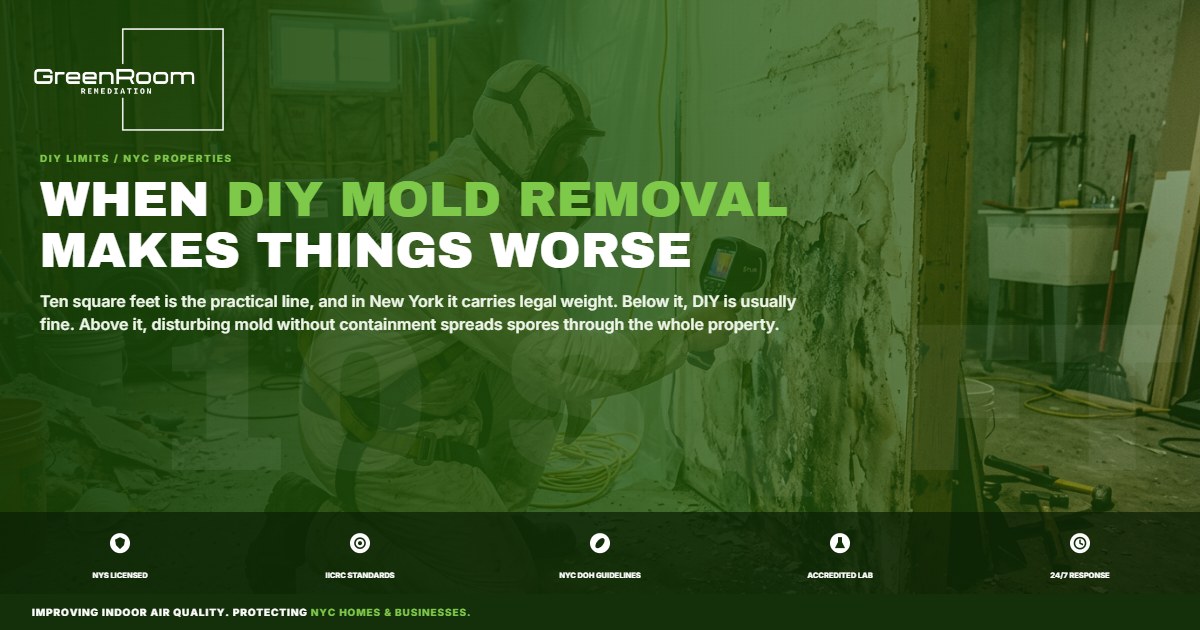
The most damaging scenario is not failing to remove mold. It is disturbing a large contaminated area without containment and distributing spores through the rest of the property.
Disturbing affected drywall, insulation or carpet can release particles and spread contamination. The extent, materials and work methods determine what containment and protective measures are appropriate. Do not open suspect concealed areas simply to see how far the problem extends.
Send it to a professional when any of the following apply:
- The affected area exceeds roughly ten square feet, or you suspect the visible growth understates what is behind it.
- The water source was contaminated. Sewage backup or flood water carries biological hazards that change the job entirely, as covered in our piece on sewage backup cleanup.
- You suspect the HVAC system is contaminated. Avoid running a potentially contaminated system until it has been evaluated.
- Anyone in the household has asthma, a respiratory condition, or a compromised immune system.
- Affected absorbent materials, such as insulation or ceiling tile, may need removal, or you suspect structural damage.
- You manage a rental, co-op or condominium and need to confirm the applicable owner duties, licensing rules, safe work practices and documentation before starting.
- An insurance claim, sale or violation is involved. Confirm the required scope and documentation with the responsible party before authorizing work.
The Bleach Question
The EPA does not recommend bleach or other biocides as routine mold-cleanup practice. Killing organisms alone does not remove affected material or correct the water problem.
Choose a method appropriate to the surface and the project. Never mix bleach with ammonia or other cleaning products. More chemical is not a substitute for moisture repair, material removal when needed, and thorough drying.
What Nobody Should DIY
For regulated mold projects, an independent licensed assessor evaluates completion against the remediation plan. A visual check or a single air sample cannot certify that a space is safe for every occupant. Small household cleanup does not automatically require testing; seek professional advice when the extent, moisture source or occupant concerns remain unresolved.
Frequently Asked Questions
Can I just paint over mold with mold-resistant paint?
Do not paint over existing mold or damp material. Address the growth and moisture source and allow appropriate drying before repainting. A coating cannot replace cleanup or needed repairs.
I cleaned it and it came back in a month. What did I do wrong?
Recurring growth warrants another look at moisture, the affected material and whether cleanup addressed the full problem. It may reflect an unresolved leak or condensation, but the timing alone does not establish the cause. Document the recurrence and seek an assessment if the source remains unclear.
Does a small patch mean I do not need testing?
EPA says sampling is usually unnecessary when visible mold is present. An assessment can investigate moisture and extent without automatically requiring air samples. If sampling is proposed, ask what question it will answer and how the result will change the plan. Mold sampling cannot diagnose an illness or establish safety for every occupant.
Related service: water damage restoration in NYC.
Unsure what the next step should be? Review our mold assessment and testing options and mold remediation service, or request a project review. Call GreenRoom Remediation at (917) 965-3754. Assessment and remediation remain independent on the same regulated project.
GreenRoom Remediation | NY State Licensed Mold Remediation Contractor (License #24-6S44B-SHMO) | IICRC-Certified | OSHA-Trained | BBB Accredited | Serving NYC, Brooklyn, Queens, Manhattan, the Bronx, Staten Island, Long Island, Westchester, and Surrounding Areas.
view related content