table of contents
Quick answer: Standard homeowners insurance does not cover mold from floodwater in Queens, Long Island, or anywhere else in the NYC metro area. Flood damage, defined as water that enters a structure from an external rising water source, requires a separate policy through the National Flood Insurance Program administered by FEMA, or a private flood insurer. NFIP policies cover mold remediation when the mold directly results from covered flood damage, but the documentation requirements, claim process, and coverage limits differ significantly from homeowners claims. The standard NFIP policy covers up to $250,000 in building damage and $100,000 in contents for residential properties, with a mandatory 30-day waiting period from purchase to coverage effective date. GreenRoom Remediation handles post-flood mold remediation and water damage restoration throughout Queens, Long Island, Westchester, and all five NYC boroughs. Call (917) 965-3754 for emergency response.
Flooding is a recurring reality across much of the NYC metro area, particularly in low-lying neighborhoods in Queens, coastal Long Island communities, and parts of Brooklyn and Staten Island that experienced significant flood damage during Hurricane Sandy and subsequent storm events. For property owners in these areas, understanding the difference between homeowners insurance and flood insurance is not academic. It directly determines whether a mold remediation claim after a flooding event is covered, who the adjuster is, and what documentation is required to support the claim.
What Is the Difference Between Flood Insurance and Homeowners Insurance for Mold Claims?
The fundamental distinction is the source of the water. Standard homeowners insurance in New York covers water damage from internal sudden and accidental events such as burst pipes, water heater failures, and appliance overflows. It does not cover damage from water that enters a property from an external source, including storm surge, rising rivers, overflowing retention ponds, and street drainage that backs up during heavy rain. All of these external water events are defined as flooding and require NFIP or private flood insurance coverage.
In practice, this distinction causes confusion because water entering a Queens or Long Island home during a severe rain event may arrive through multiple pathways simultaneously. Street drainage backup through a floor drain is a flood event. A roof leak caused by the same storm may be a homeowners policy event. A pipe that freezes and bursts during a winter storm is a homeowners policy event even if the storm also caused flooding in the neighborhood. Adjusters are specifically trained to identify water source and entry point because the determination of which policy responds depends on it, and the two policies can both apply to different damage in the same property from the same storm.
For mold that develops from floodwater, the NFIP policy is the applicable coverage source, and the mold claim flows through the FEMA adjuster process rather than the standard homeowners claim process. The NFIP does not operate identically to private insurers. Understanding how NFIP claims work is essential for property owners in flood-prone areas of Queens and Long Island who may not have filed an NFIP claim before.
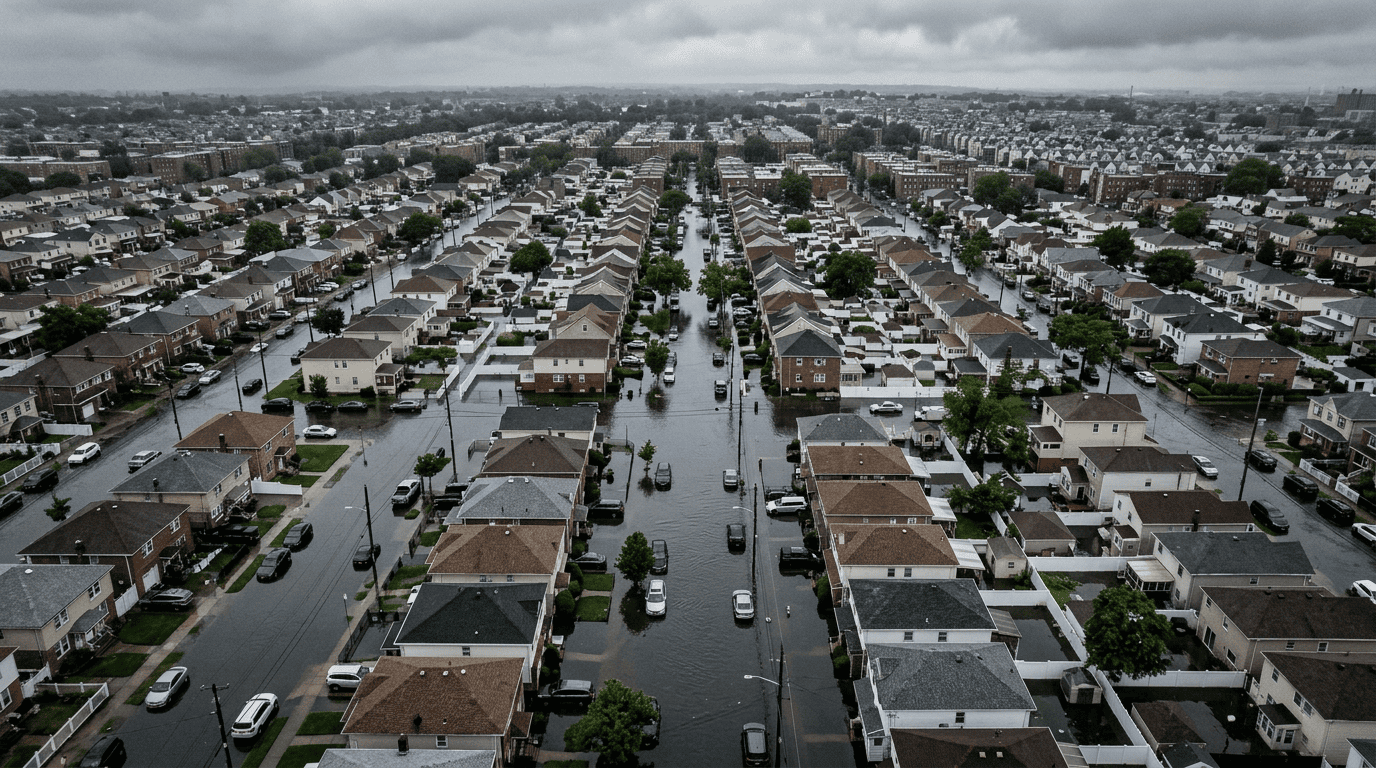
Mold After a Flood in Queens or Long Island: What NFIP Coverage Pays For | NYC Mold Remediation & Water Damage Restoration
What Does NFIP Coverage Actually Pay for Mold in Queens and Long Island?
The NFIP Standard Flood Insurance Policy covers mold remediation costs when mold directly results from flood damage that occurred during the coverage period. This means that mold discovered weeks or months after a flood event is still potentially covered if the property owner can document that the flood created the moisture conditions that led to the mold growth and that the property owner took reasonable steps to mitigate damage promptly.
The building coverage portion of an NFIP policy, which covers structural elements including floors, walls, foundation, and built-in systems, is what responds to structural mold remediation costs. The coverage limit for residential building coverage is $250,000 under a standard NFIP policy. Contents coverage is a separate policy with a $100,000 limit and covers personal property damaged by flood, including furniture and appliances, but does not cover the structural remediation itself.
Important exclusions under the NFIP that affect mold claims include damage caused by moisture, mildew, or mold that the property owner could have avoided by taking appropriate protective action after the flood. This exclusion is frequently invoked when property owners delay remediation for weeks after a flood event. The NFIP position is that a reasonable property owner should take immediate steps to extract water, dry materials, and prevent mold growth. Mold that developed because protective measures were not taken promptly may be excluded under this provision even when the underlying flood was covered.
How Does the NFIP Claims Process Work for Mold?
NFIP claims are handled differently from standard homeowners claims in ways that matter to the property owner’s experience and outcome. NFIP assigns Write Your Own participating insurers or FEMA direct adjusters to handle claims, and the adjuster process follows FEMA guidelines rather than the individual carrier guidelines that apply to homeowners claims.
After a flood event, NFIP policyholders must file a claim promptly and provide proof of loss within 60 days of the flood. The NFIP adjuster inspects the property and documents the flood damage. For mold that has developed from flood moisture, the adjuster evaluates whether the mold is directly attributable to the flood event and whether the property owner took reasonable mitigation steps. Licensed mold remediation contractor documentation, including pre-remediation assessor reports, moisture readings, infrared imaging, and clearance testing results, is as important in NFIP mold claims as in standard homeowners claims.
One significant difference is that NFIP does not operate under New York State’s NY Regulation 64 prompt payment requirements, which require private insurers to acknowledge claims within 15 business days and settle within 15 business days of complete documentation. NFIP claims have their own timelines governed by FEMA guidelines, and complex mold remediation claims following major flood events such as hurricane-related flooding in Queens and Long Island can take significantly longer to resolve than typical homeowners mold claims. For a comparison of how homeowners insurance mold claims work, see our guide on whether homeowners insurance covers mold remediation in NYC.
Which Queens and Long Island Neighborhoods Face the Highest Flood and Mold Risk?
FEMA flood zone maps, which define the areas with the highest probability of flooding and the corresponding mandatory flood insurance purchase requirements, identify several Queens and Long Island neighborhoods as Special Flood Hazard Areas where flood risk is most significant.
In Queens, neighborhoods in the Rockaways peninsula, Howard Beach, Broad Channel, and low-lying areas of Jamaica Bay have experienced repeated flooding during storm events and have significant proportions of properties in FEMA Special Flood Hazard Area designations. These areas experienced extensive flood damage during Hurricane Sandy in 2012 and continue to face elevated flood risk during major storm events. Properties in these neighborhoods that carry NFIP coverage are well-positioned to file flood-related mold claims when storms cause flooding. Properties without NFIP coverage in these designated zones face uninsured losses.
On Long Island, Nassau County communities including Long Beach, Island Park, Baldwin Harbor, and parts of the South Shore face similar flood exposure from ocean storm surge and bay flooding. Suffolk County’s South Shore communities including Bay Shore, Islip, and coastal hamlets along the Great South Bay also carry elevated flood risk. Long Island properties in flood zones that experienced Hurricane Sandy damage received significant NFIP payouts, and the mold claims associated with that flooding represented some of the most complex NFIP mold claim situations in the region’s history because of the scale of the event and the delays in remediation caused by the scope of destruction across the area.
The 30-Day Waiting Period: Why Flood Insurance Cannot Be Purchased Reactively
The NFIP mandatory 30-day waiting period from policy purchase to coverage effective date is one of the most consequential facts about flood insurance for property owners in Queens and Long Island who do not currently have coverage. A flood insurance policy purchased the day before a storm warning is announced does not provide coverage for damage from that storm. Coverage does not take effect until 30 days after the policy is bound and the initial premium is paid.
Exceptions to the 30-day waiting period exist in limited circumstances, including when a policy is purchased in connection with a new loan or refinance on the property, in which case the waiting period may be waived or shortened. Private flood insurance providers operate under different rules and some offer shorter waiting periods than the NFIP standard. For property owners in flood-prone areas of Queens, Long Island, and coastal Staten Island who do not currently have flood coverage, purchasing it during a non-storm period is the only reliable way to have coverage in place for future events.
What Should Property Owners Do Immediately After Flooding?
The actions taken in the first 24 to 48 hours after flooding determine both the mold outcome and the strength of the insurance claim. The correct immediate steps are to document all visible flood damage with photographs and video before any cleanup begins, contact your NFIP insurer to report the claim, and begin water extraction as soon as it is safe to re-enter the property. Waiting for the NFIP adjuster before beginning extraction is not required and is not recommended. FEMA guidelines allow for immediate protective repairs, and delay in water extraction directly increases both the mold risk and the ultimate remediation cost.
Antimicrobial pretreatment of wet structural materials during the extraction phase is an important step in preventing mold growth during the drying period. In Queens and Long Island properties that may remain without power for days following a significant storm, natural drying without dehumidification equipment creates conditions that strongly favor mold development in saturated materials. Industrial drying equipment deployment should begin as soon as power is restored or generator access is available. Every additional day of delay between flooding and active structural drying increases the probability that mold remediation becomes a necessary concurrent scope item. For more on the relationship between water damage response time and mold risk, see our article on mold remediation, water damage restoration, and indoor air quality.
How GreenRoom Coordinates NFIP Flood Claims With Mold Remediation
NFIP claims for flood-related mold remediation require the same documentation package as homeowners mold claims: licensed assessor’s pre-remediation report, moisture readings, infrared imaging, daily remediation logs, waste disposal manifests, and post-remediation clearance testing results. The difference is that this documentation is submitted to a FEMA adjuster rather than a private carrier adjuster, and the evaluation process follows FEMA’s proof of loss requirements rather than state insurance regulations.
GreenRoom Remediation is familiar with NFIP documentation requirements and produces claim packages formatted to meet FEMA proof of loss standards. We have worked on post-flood mold remediation projects throughout Queens, Nassau County, and Suffolk County following major storm events and understand the specific documentation and timeline expectations that NFIP adjusters apply to mold claims in these markets. For properties where both NFIP coverage and homeowners coverage may apply to different aspects of the same storm damage, we coordinate documentation across both claim files simultaneously to avoid the confusion that arises when remediation scopes overlap between the two coverage sources.
Frequently Asked Questions
Does my homeowners insurance cover flood damage in Queens or Long Island?
No. Standard homeowners insurance in New York does not cover damage from external floodwater regardless of the source. Flood coverage requires a separate NFIP policy or private flood insurance. Properties in FEMA Special Flood Hazard Areas that carry a federally backed mortgage are required to maintain flood insurance, but many properties outside designated zones voluntarily carry coverage as well. Review your policy declarations page for flood coverage confirmation before assuming it is in place.
How do I know if my property is in a FEMA flood zone?
FEMA maintains publicly accessible flood zone maps at msc.fema.gov where any property address can be searched to determine its flood zone designation. Zone A and Zone AE designations indicate Special Flood Hazard Areas with the highest flood risk. Zone X designations indicate areas of minimal flood risk. Flood zone designations can change when FEMA updates its maps, and properties in Queens and Long Island have seen zone designation changes following major storm events that resulted in updated flood risk assessments.
How long does an NFIP mold claim take to settle?
NFIP claims do not follow New York State’s prompt payment requirements that apply to private insurers. Straightforward NFIP mold claims with complete documentation can be resolved in 4 to 8 weeks from claim filing. Complex claims following major flood events affecting large numbers of properties simultaneously, such as hurricane-related flooding, can take significantly longer because FEMA adjuster resources are deployed across many claims at once. Providing complete documentation promptly is the single most effective way to move your claim through the NFIP process faster.
Can I get flood insurance if I already have mold from a past flood?
Flood insurance can be purchased regardless of prior flood history or existing mold conditions. The 30-day waiting period applies from the date of purchase. Existing mold that predates the new policy is not covered by the new policy, but future flood events that occur after the waiting period ends would be covered. Remediating existing mold before purchasing flood insurance is advisable to avoid disputes about whether future mold is a new flood-related condition or a continuation of a pre-existing condition.
Is sewer backup from a storm covered by NFIP or homeowners insurance?
Sewer backup caused by a flooding event falls into a complex coverage zone. If the backup is directly caused by floodwaters overloading the sewer system, some NFIP policies may respond. If the backup is from a non-flood cause such as a blockage unrelated to flooding, a sewer backup endorsement on the homeowners policy is the applicable coverage. Many properties in Queens and Long Island experience sewer backup during heavy rain events that may have both flood-related and non-flood-related components, making coverage determination a fact-specific question that should be reviewed with both insurers.
For post-flood mold remediation and water damage restoration in Queens, Long Island, Brooklyn, Staten Island, Manhattan, the Bronx, Westchester, or Northern New Jersey, call GreenRoom Remediation at (917) 965-3754. We respond 24 hours a day, 7 days a week and coordinate NFIP and homeowners claim documentation simultaneously.
GreenRoom Remediation | NY State Licensed Mold Remediation Contractor (License #24-6S44B-SHMO) | IICRC-Certified | OSHA-Trained | BBB Accredited | Serving NYC, Brooklyn, Queens, Manhattan, the Bronx, Staten Island, Long Island, Westchester, and Surrounding Areas.
view related content