table of contents
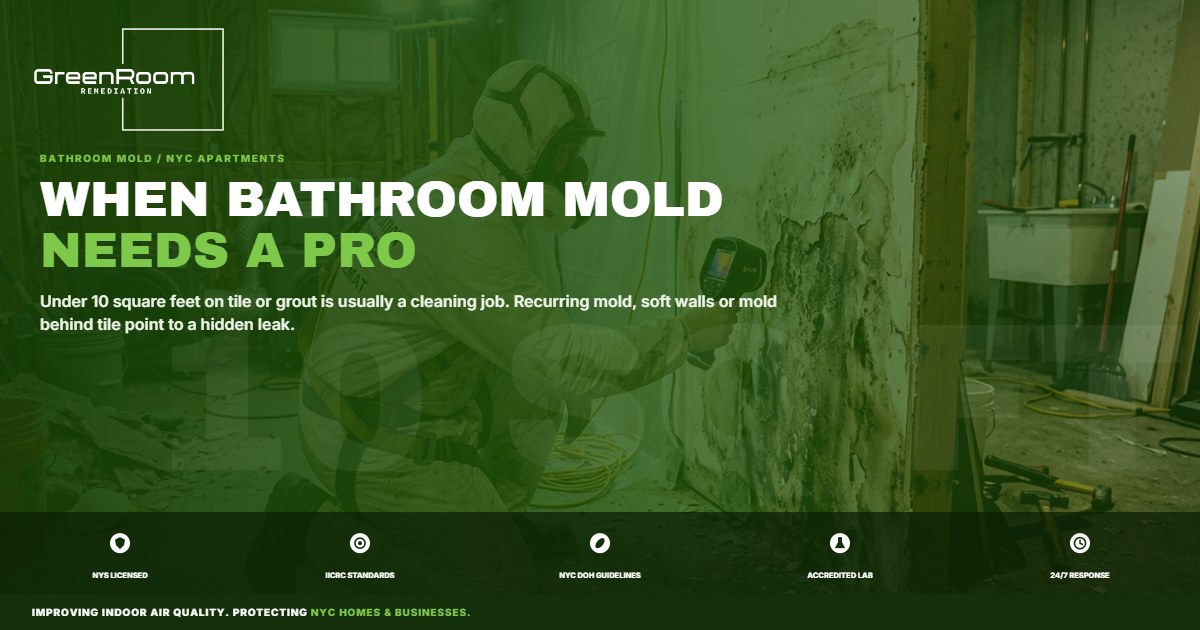
Quick answer: Bathroom mold smaller than about 10 square feet on tile, grout or a painted surface is usually a cleaning job. Mold that keeps coming back, covers more than 10 square feet, grows behind tile or inside the wall, or smells musty after cleaning needs a licensed mold professional.
NYC bathrooms are built for mold. Many have no exhaust fan or a fan that vents nowhere, hot showers run daily, and steam heat keeps the room warm all winter. The question is rarely whether a bathroom will see mold. It is whether what you see is surface growth you can wipe away or a symptom of water getting somewhere it should not.
Is bathroom mold dangerous?
Small amounts of surface mold on grout or caulk are common and not an emergency for most healthy adults. Mold becomes a health concern when it grows over a larger area, releases spores into the air you breathe every day, or affects someone with asthma, allergies, a weakened immune system, a newborn or an elderly family member. Musty odor in a closed bathroom is a sign that growth is active somewhere, even if you cannot see it.
When can I clean bathroom mold myself?
You can usually handle it yourself when all of these are true:
- The growth covers less than about 10 square feet in total (roughly a 3 by 3 foot patch).
- It sits on a hard, non-porous surface such as tile, glazed grout, a tub surround or a painted ceiling.
- It does not return within a few weeks after cleaning and better ventilation.
- No one in the home has a health condition that makes mold exposure riskier.
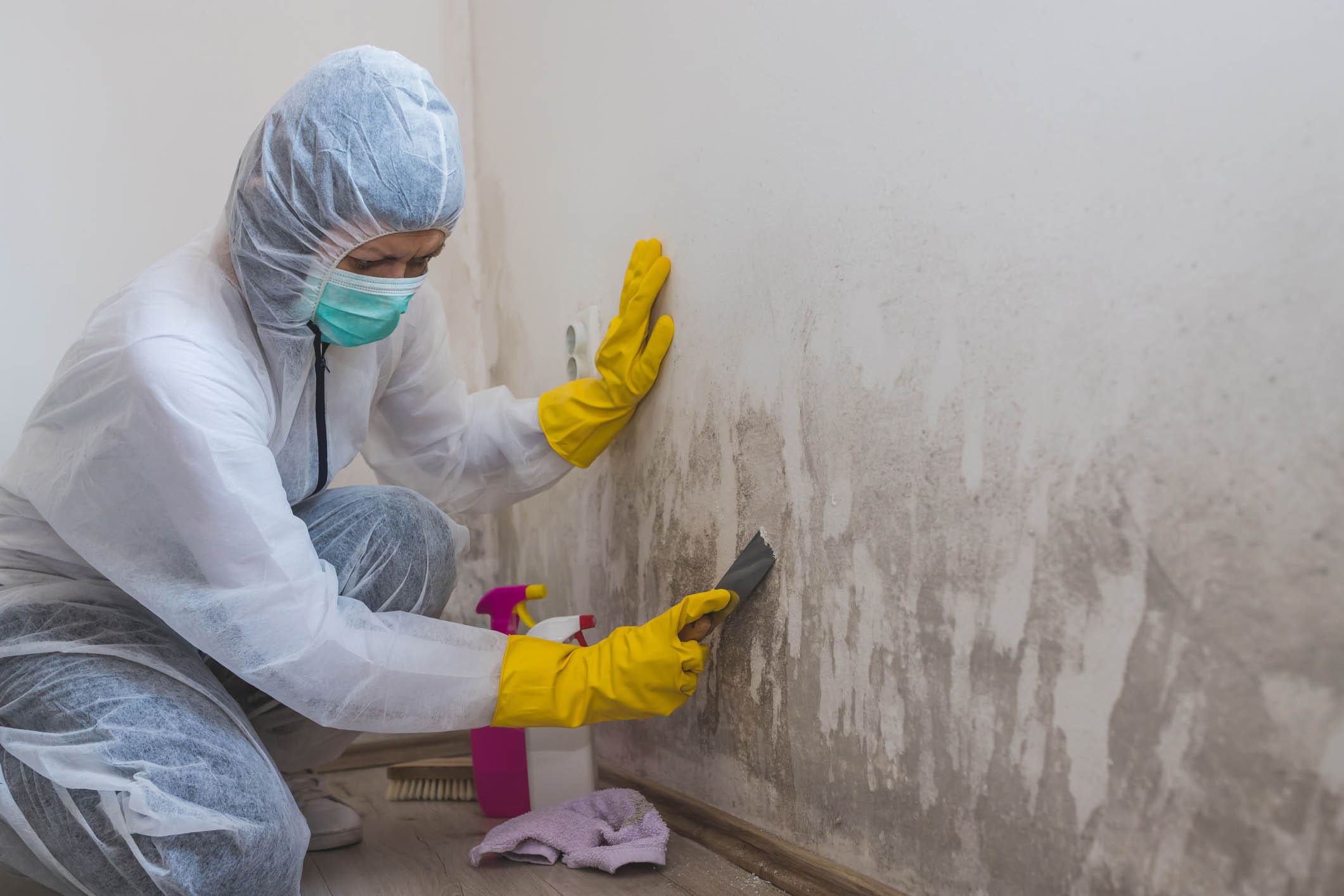
Use a detergent solution, scrub, rinse and dry the surface completely. Wear gloves and eye protection, and run the fan or open a window. Never mix bleach with ammonia-based cleaners. Replace caulk that has mold growing underneath it rather than trying to clean it, because the growth is inside the bead.
Signs bathroom mold needs a professional
Call a licensed mold professional when you see any of the following:
- It keeps coming back in the same spot. Recurring mold almost always means a moisture source: a slow leak at the tub drain, a failed shower pan, a cracked tile joint or condensation inside an exterior wall.
- Tiles are loose, grout is crumbling or the wall feels soft. Water has reached the substrate behind the tile.
- Mold appears on the ceiling of the apartment below. The bathroom above is leaking, which is common in pre-war NYC buildings.
- Drywall, wood trim or the vanity base shows staining or swelling. Porous materials hold mold that cleaning cannot reach.
- The total area is larger than 10 square feet. New York State treats this as a mold project with specific licensing rules.
What New York law says about bathroom mold over 10 square feet
Under New York State Labor Law Article 32, mold work covering more than 10 square feet must follow a licensed process. A licensed mold assessor inspects the area and writes a remediation plan. A licensed mold remediation contractor then performs the work to that plan. The law does not allow the same company to both assess and remediate the same project, which protects you from a contractor who writes a plan for work it will then bill for.
In New York City, Local Law 55 also requires landlords in most rental buildings with three or more apartments to inspect for and correct mold and the leaks that cause it. Tenants who report bathroom mold to a landlord should do it in writing and keep photos.
Why does my bathroom keep getting mold?
The three most common causes in NYC apartments are poor ventilation, hidden leaks and cold surfaces. A bathroom without a working exhaust fan cannot clear shower humidity, so moisture settles on the coldest surfaces, usually the ceiling and the exterior wall. Hidden leaks at the tub spout, drain or shower valve feed mold inside the wall where you cannot see it. Exterior walls in older masonry buildings stay cold in winter, and warm humid air condenses on them.
Fixing the moisture source is the only permanent fix. Cleaning without fixing the source buys a few weeks.
How professionals handle bathroom mold
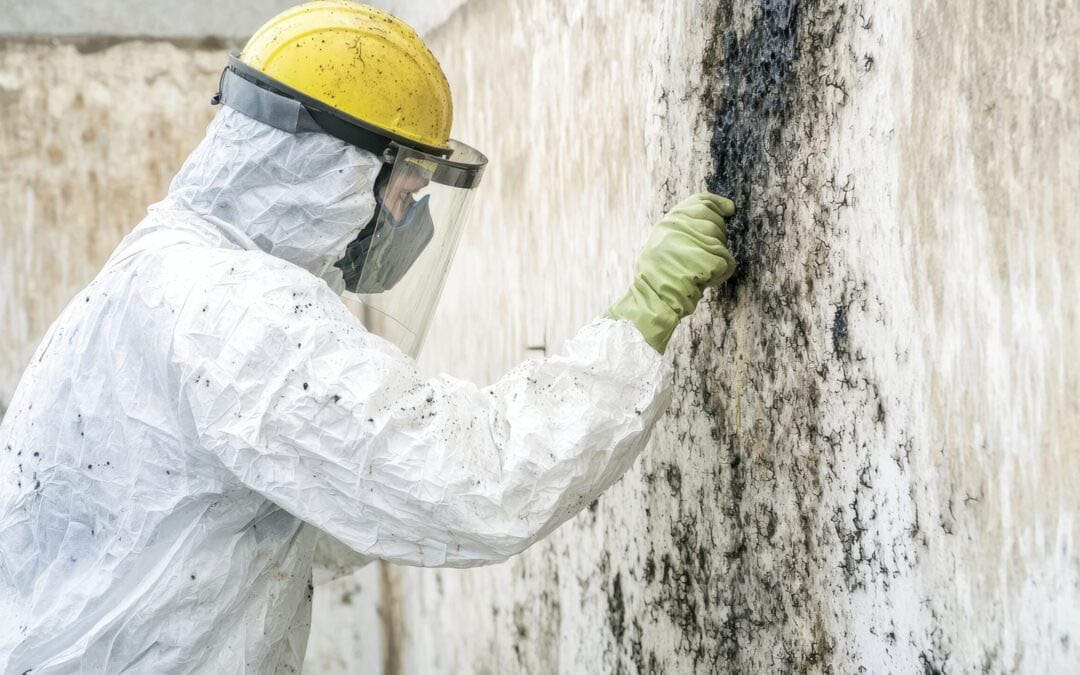
A professional remediation follows the remediation plan and typically includes containment with plastic sheeting and negative air pressure so spores do not spread into the rest of the home, HEPA vacuuming and air filtration, removal of mold-damaged porous materials such as drywall or cement board, cleaning of the remaining framing and surfaces, and drying before the bathroom is rebuilt. After the work, an independent clearance inspection confirms the area meets the plan’s clearance criteria.
How to prevent bathroom mold
- Run the exhaust fan during every shower and for 20 to 30 minutes after.
- Confirm the fan actually vents outside or into a working building exhaust shaft.
- Squeegee shower walls and leave the curtain or door open to dry.
- Reseal grout once a year and replace failing caulk promptly.
- Keep indoor humidity between 30 and 50 percent.
- Report any leak from the unit above right away.
Frequently asked questions
Is black mold in the shower toxic?
Most dark mold on shower grout is a common surface mold, not the species people mean by “toxic black mold.” Color does not identify the species. If the growth is large, recurring or affecting someone’s health, have it assessed.
Can I paint over bathroom mold?
No. Paint traps moisture and mold underneath, and the growth returns through the paint. Clean or remove the mold and fix the moisture source first.
Who pays for bathroom mold in a NYC rental?
In most cases the landlord is responsible for correcting mold and the leaks behind it. See our guide to mold and tenant rights in NYC rentals.
How long does bathroom mold remediation take?
Most single-bathroom projects take one to three days of remediation work, plus drying time and the clearance inspection. Rebuilding the tile is a separate step.
Related service: water damage restoration in NYC.
If your bathroom mold keeps coming back or covers more than a small patch, GreenRoom Remediation can help. We are New York State licensed and follow IICRC standards and NYC Department of Health guidelines. Call (917) 965-3754 or request a quote. Learn more about our mold removal and remediation services.
GreenRoom Remediation | NY State Licensed Mold Remediation Contractor (License #24-6S44B-SHMO) | IICRC-Certified | OSHA-Trained | BBB Accredited | Serving NYC, Brooklyn, Queens, Manhattan, the Bronx, Staten Island, Long Island, Westchester, and Surrounding Areas.
view related content